Online Reputation & Google Review Management Agency | Oli-via-net

Oli-via-net, an agency specialising in online reputation & customer reviews: Google Business Profile, Trustpilot, social media.

Take control of your image online. We look after your online reputation.

Your online reputation is not optional — it is your first sales argument. Oli-via-net helps you take back control of your digital image on Google Business Profile, Trustpilot, social media and every review platform

For 15 years we have been turning reputation management into a growth lever : collecting authentic reviews, writing professional responses, removing defamatory reviews that breach Google's policy, and building a communication strategy.


  • 72 785 reviews managed for 66 companies
  • Specialists in Google Business Profile optimisation
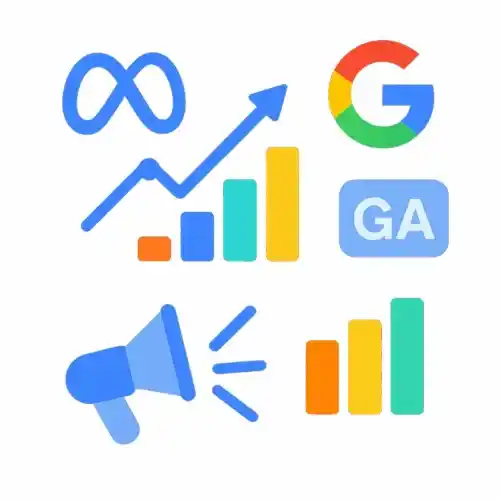
This illustration represents the multi-channel paid campaigns run by Oli-via-net: Google Ads (Search, Display, YouTube), Meta Ads (Facebook, Instagram) and LinkedIn Ads (B2B). The aim: coherent campaigns driven by data and artificial intelligence, to maximise immediate growth and advertising profitability.
Official Google logo used to illustrate organic search (SEO).
Meta logo representing the Facebook and Instagram advertising platform used by Oli-via-net to boost brand visibility.
LinkedIn logo illustrating the B2B advertising managed by Oli-via-net to generate qualified leads through LinkedIn Ads.

Why your online reputation decides your success

Every day your prospects look you up on Google, read your reviews and compare your rating with the competition. Poor management can destroy years of work in a matter of weeks.

Client results

Measurable results on your image and your conversions

Positive reviews collected in 3 months.

*Average results observed across a panel of 66 companies in 2025

more visits & actions on Google Maps and the profile
More revenue in 4 months

Our expertise across the different review platforms

Poor management can destroy years of work in a matter of weeks, and most companies endure their reputation instead of steering it. They discover negative reviews too late, do not reply to comments, and never encourage satisfied customers to speak up.

Every review platform has its own codes, rules and opportunities. We know the specifics of each one and use them to maximise your credibility.

Why Google Business Profile is crucial: Google Business Profile (formerly Google My Business) is THE first thing your prospects see when they look for you on Google or Google Maps. Your rating, your reviews and your replies appear directly in the search results.

Major local SEO impact: Google favours well-rated, active businesses in its local ranking algorithm. Managing your Google profile properly improves your position.

Google reviews are a major signal for generative AI (ChatGPT, Gemini, Perplexity and others): they use them to filter and recommend trustworthy businesses. This is still underestimated today, and it will become critical over the next two to three years — without recent reviews, you already do not exist in AI search.

What we do for you:

Complete profile optimisation:

Collecting Google reviews:

Managing Google reviews:

Multi-location:

Result: Better local visibility, qualified traffic to your site or premises, and greater trust.

Why Trustpilot and verified review platforms: These certified platforms add credibility, particularly for e-commerce and B2B. They guarantee that reviews are authentic through purchase verification.

Trustpilot: Internationally recognised, ideal for e-commerce and online services. Avis Vérifiés: The French leader, widely used in French e-commerce.

Setup and optimisation:

Authentic review collection:

  • An automatic email invitation once delivery is confirmed
  • A follow-up if no review after 7 days
  • Messages personalised to the product or service purchased
  • Strict compliance with the rules (no reward for a positive review)

Managing reviews:

Making the most of them:

Result: E-commerce conversion rate up 25 to 40%, fewer abandoned baskets, maximum reassurance for the customer.

Why you need to watch social media and forums: Your customers talk about you everywhere: Facebook, LinkedIn, X, specialist forums, Reddit, Discord. These mentions shape your image even when they are not formal reviews.

The risk: A negative comment going viral on X, a critical thread on an industry forum, a Facebook post that turns sour — any of these can blow up within 24 to 48 hours.

What we do for you:

Multi-channel monitoring:

  • Automated monitoring of your brand across every social network
  • Real-time alerts when a negative mention is detected
  • Watching hashtags and keywords tied to your business
  • Competitive monitoring — what is said about your competitors

Handling mentions:

  • A fast response to positive mentions (thanks, sharing)
  • A strategic response to negative mentions (empathy, resolution)
  • Moderating comments on your pages, in line with your guidelines
  • Reporting defamatory or fake content

Crisis management:

  • An intervention protocol in case of a bad buzz
  • Crisis communication prepared in advance (templates, spokesperson)
  • A dilution strategy — publishing positive content to drown out the negative
  • Coordination with your management and comms team for coherent messaging

Reputational community management:

  • Positive animation of your communities
  • Publishing content that showcases your expertise
  • Highlighting testimonials from satisfied clients
  • Building brand ambassadors from loyal customers

Result: A protected brand image, crises avoided or contained, and positive sentiment dominating around your brand

Every day your prospects look you up on Google, read your reviews and compare your rating with the competition. Poor management can destroy years of work in a matter of weeks.

Illustration representing the growth of multi-platform paid campaigns across Google, Meta and LinkedIn managed by Oli-via-net.

Let's hit your growth targets together

We work with companies of every size: small businesses, mid-market, large accounts and startups.

  • Review analysis (volume, rating, sentiment, recurring topics)
  • Platform mapping & priorities
  • 3 priority actions to launch right now
Illustration of a free online reputation audit by Oli-via-net, showing a magnifying glass, a star and reputation analysis icons.

AI working for your reputation

Managing your reputation by hand is time-consuming and risky. A negative review at 11pm on a Saturday can blow up before Monday morning if you do not see it. AI lets us watch everything in real time and step in quickly.

Result: You never miss a review again, you intervene quickly, and you steer your reputation with data.

Automated monitoring around the clock Our workflows and algorithms scan continuously:

  • All your review profiles (Google, Trustpilot, Facebook, TripAdvisor and more)
  • Mentions of your brand on social media
  • Forums and sector review sites
  • Comparison sites and specialist platforms

An immediate alert when:

  • A new negative review appears (<4★)
  • A comment contains critical keywords ("scam", "incompetent", "disgrace" and the like)
  • A negative mention goes viral (shares and likes rising)
  • Your average rating drops sharply
  • Suspected fake reviews are detected

AI analyses the tone and the emotions in every review:

  • Positive, neutral or negative sentiment with a confidence score
  • Emotions detected : anger, frustration, satisfaction, enthusiasm
  • Recurring keywords : which aspects come up most often, positive or negative
  • Comparison over time : is your reputation improving or deteriorating?

AI suggests replies that fit:

  • A tone in line with your brand guidelines (warm, professional, relaxed and so on)
  • A contextual reply according to the type of review (faulty product, slow service, cold welcome and so on)
  • SEO optimisation : keywords worked naturally into the reply
  • Human validation : we read and adjust before publishing

A consolidated dashboard with:

  • Change over time (charts)
  • Sentiment analysis (% positive, neutral, negative)
  • Top 10 keywords mentioned
  • Automatic competitive benchmark

Our four-step methodology

Our methodology rests on a proven process, designed to improve your online reputation durably and turn your customer reviews into a real growth lever.

Every step aims to raise your average rating, increase the volume of positive reviews and strengthen your credibility online, while keeping your customer relationship transparent and authentic.
Concrete, measurable actions, aligned with your business stakes.

Photo d’analyse de graphiques et de tableaux de bord illustrant la méthodologie en 4 étapes d’Oli-via-net pour la gestion de l’e-réputation.

Step 1: Full audit & diagnosis

  • Mapping your presence online (Google, Trustpilot, social media, forums)
  • Analysing your current reviews (volume, average rating, sentiment, recurring keywords)
  • Competitive benchmark (compared with 5 to 10 direct competitors)
  • Identifying the priority platforms for your sector
  • Detecting weak signals (negative mentions, fake reviews, emerging bad buzz)
  • An overall reputation score, and one per channel

Step 2: Strategy & action plan

  • Setting the objectives (target rating, review volume, response rate)
  • Building the review collection strategy (timing, channels, messages)
  • Drafting the response guidelines (tone, turnaround, handling critical cases)
  • Identifying corrective actions (removal, right of reply, mediation)
  • A schedule of actions over 3, 6 and 12 months
  • Assigning responsibilities internally (who replies, who raises the alert, who decides)

Step 3: Rollout & tooling

  • Setting up the automated monitoring tools (real-time alerts)
  • Configuring the review collection systems (emails, SMS, QR codes)
  • Creating reply templates that match your brand image
  • Embedding review widgets on your website
  • Training your teams on day-to-day management
  • Optional AI automation to save time (suggested replies)

Step 4: Ongoing steering & optimisation

  • Daily monitoring across every platform
  • A reply within 24 to 48 hours at most to every review
  • Detailed monthly reporting (rating, volume and sentiment over time)
  • Analysing customer feedback to improve the product or service
  • Strategic adjustments based on results
  • Crisis management if a bad buzz is detected

At Oli-via-net we have built our approach to online reputation around a rigorous technical stack, combining strategic steering with intelligent automation. For the overall view and organisation we use tools such as Localo as a central dashboard, to schedule replies and organise the tasks tied to local reputation. For workflow automation we have integrated n8n which lets us connect review alerts to our internal systems and automate certain actions. On the performance and visibility side, we cross-reference data from Google Search Console, Google Business Profile (formerly Google My Business), GA4 and Semrush to measure the impact of reviews on local search and adjust the strategy continuously. This combination of tools lets us pair responsiveness and editorial relevance with measurable SEO performance.

Client case: a 4-star hotel in Normandy

Reviews under control, for better profitability and peace of mind

Illustrative photo of a hotel before its online reputation and Google rating were improved, showing a typical frontage with a

(illustrative photo).

A 4-star hotel* was watching its online reputation deteriorate:

Badly managed reputation was costing it revenue directly: negative comments about service and cleanliness left unanswered, a falling average rating, - 20% direct bookings in 6 months and a sharp drop in Google Maps visibility. The algorithm was penalising the absence of recent reviews and a response rate close to zero. We rolled out a four-phase strategy to reverse the trend and turn their reviews into a growth lever.

*For confidentiality reasons we cannot name this hotel.

After taking on the reviews

Photo of a modern hotel room illustrating the return of trust and the rise in the Google rating after Oli-via-net stepped in.

Reviews handled in four phases:

  • Full analysis of the 380 reviews (Google, Booking, TripAdvisor, Expedia)
  • Four defamatory reviews identified (reported and removal obtained)
  • All reviews centralised on a single dashboard
  • Personalised replies to 100% of the untreated reviews
  • An empathetic tone for negative reviews, plus a concrete action plan
  • Warm thanks for positive reviews
  • Every reply optimised for SEO, with keywords worked in naturally

We put continuous collection in place, strictly within Google's rules:

  • An automatic email after the purchase or the stay, carrying a direct link to your Google profile
  • An SMS reminder at D+2 for customers who mostly browse on mobile
  • A QR code at reception and on your printed material (room card, counter, receipt)
  • A natural prompt, with no incentive and no filtering — which is what Google's rules require
  • Targeted follow-ups with the satisfied customers already identified
  • A dashboard shared with management for quality steering

Results after 90 days:

  • Direct bookings jumped 62%, completely reversing the negative trend.
  • Google Maps visibility rose 85%


The trap to avoid: Buying fake reviews, offering rewards for positive reviews, pestering customers — these practices are forbidden and punished by the platforms (profile removal) and by law (fines up to 75,000 € for the company). Deal with dissatisfaction BEFORE it becomes a review.
If you identify an unhappy customer, contact them privately to resolve it. Offer compensation where it is legitimate (refund, goodwill gesture).
Once it is resolved they will not post a negative review — they may even post a positive one. Read how to reply to reviews in 2026 in this article: Moderating your Google Business Profile in 2026: the mistake 90% of professionals make (and how to avoid it)

When the experience is still fresh, the response rate is two to three times higher.

  • E-commerce: 3 to 7 days after delivery
  • Services: 24 to 48 hours after the job
  • Hotels and restaurants: on the day of departure or the meal
  • B2B: end of project, or a key milestone signed off

Sincere, neutral, simple, unintrusive.

A message that is short, clear and sincere gets more people to act.

  • A simple, neutral tone
  • No pressure, no unlawful incentive
  • Explain why the review matters ("it helps us improve")

The simpler it is, the more likely the customer leaves a review.

  • A direct link to the review page, with nothing to search for
  • A pre-filled form on your site if needed
  • The option to rate in 30 seconds
  • No account required wherever possible

Use the right channels and respect the rules.

  • Never a reward in exchange for a review
  • A personalised email
  • SMS & QR code after the job
  • Asking in person (shop or restaurant)

100% satisfied clients

Juliette

I am delighted to have trusted Oli-via-net with the rebuild of my site. A very professional agency that adapted to my business and to the size of the company. I recommend them.

Hervé Chaussin

I asked Nicolas to build a website for my company from scratch and I am very happy with the result. Nicolas listens and understood what I wanted very quickly.
I highly recommend him.

SARL Liberum

Great advice, highly competent and always available! I also really appreciated his expertise in SEO and automation, which helped me gain visibility and efficiency.

Authentic reviews, verifiable on our Google Business Profile.

Frequently asked questions on online reputation & customer review management

Your online reputation decides whether a prospect contacts you or picks your competitor. A rating under 4 stars, unanswered negative reviews or no recent reviews at all are enough to knock you out of the running before the potential client ever visits your site.

This FAQ answers the most common questions on managing reviews across Google Business Profile, Trustpilot, social media and review platforms — how to protect your reputation, collect authentic reviews, handle crises and turn customer testimonials into a measurable competitive advantage.

Understanding online reputation and its business impact

Answer: Because 92% of consumers read reviews online before deciding to buy or make contact, and because your digital reputation acts as an automatic filter. A rating under 4 stars eliminates 86% of potential prospects before they ever visit your site.

Online reputation affects three critical dimensions:

  • Your visibility : Google Maps and generative AI (ChatGPT, Perplexity, Gemini) favour businesses with recent reviews and high ratings
  • Your conversion rate : a site rated 4.8/5 converts two to three times better than a competitor at 3.9/5
  • Your acquisition cost : a good reputation reduces the need for paid advertising — the reviews do the persuading

In concrete terms: three consecutive unanswered negative reviews can cost you 59% of qualified prospects. A neglected reputation is not an image problem — it is a measurable revenue leak.

Answer: Awareness measures whether people know you. Online reputation measures what they think of you once they do.

You can be very well known and have a disastrous reputation — high visibility, no conversion. Conversely, a small local business with 150 reviews at 4.9/5 has an excellent reputation that converts heavily, even with limited awareness.

In practice:

  • Awareness : how often your brand name is searched, direct traffic, mentions on social media
  • Online reputation : average rating, review volume, sentiment expressed, response rate, crisis handling

Online reputation acts as a multiplier on awareness : the better known you are, the more devastating a bad reputation becomes. But even with modest awareness, an excellent reputation generates growth through word of mouth and organic recommendation.

Moderately damaged (rating between 3.5 and 4.0):

  • 2 to 4 months to climb back to 4.3-4.5/5 with proactive collection of authentic reviews and professional replies

Critical (rating under 3.5, or a recent bad buzz):

  • 4 to 6 months to stabilise the situation and reverse the trend
  • 6 to 12 months to reach a solid reputation (above 4.5/5)

The three accelerators:

  1. Intensive collection of authentic reviews (diluting negative reviews in a growing volume of positive ones)
  2. A professional reply to 100% of negative reviews (showing you take feedback seriously)
  3. Visible operational fixes (resolving the recurring problems mentioned in the reviews)

Handling negative reviews and crises

Answer: An unfair negative review — exaggerated, one-sided, emotional — must never go unanswered, but your reply is addressed as much to future customers as to the person who wrote it.

The structure of an effective reply, in five steps:

  1. Thank them (even when it is hard): "Thank you for taking the time to share your feedback"
  2. Acknowledge the emotion without validating the wrong facts : "We understand your disappointment" (not "you are right")
  3. Set the facts straight, calmly : "Our records show your booking was honoured at the agreed time"
  4. Offer a resolution : "We would be glad to talk privately to understand what happened"
  5. End positively : "We remain at your disposal to improve your experience"

What you must NEVER do:

❌ Be aggressive or sarcastic — you lose every reader

❌ Get into a long public debate — it makes things worse

❌ Deny everything as a reflex — you lose credibility

❌ Threaten legal action (except in extreme, proven defamation cases)

Observed result: 68% of consumers change their negative perception of a company after reading a professional, empathetic reply to a negative review.

Answer:Yes, but only if it breaches Google's policy. You cannot remove a negative review simply because you dislike it — but Google does remove reviews that violate its rules.

Valid grounds for removal:

  • A fake review (the person was never a customer, no purchase or visit can be verified)
  • Spam or automated content (a generic copy-pasted review)
  • A conflict of interest (a competitor, or a disgruntled former employee, with evidence)
  • Offensive, hateful or defamatory content (insults, discriminatory language)
  • Off topic (a review left on the wrong business, obvious confusion)
  • Personal data or confidential information published

An effective reporting procedure:

  1. Sign in to your Google Business Profile
  2. Find the review, then "Report a review as inappropriate"
  3. Select the precise ground (with screenshots and evidence where possible)
  4. Google reviews it within 5 to 15 days, sometimes longer

Success rate at Oli-via-net: 72% of defamatory or fake reviews reported with a solid case are removed.

If Google refuses removal and the review is manifestly defamatory, legal action is possible — a formal notice, then court — but it is long and costly, and should be reserved for extreme cases.

Answer: A badly handled bad buzz can destroy ten years of reputation in 48 hours. The key: responsiveness, transparency and a visible action plan.

A six-step crisis protocol:

1. Immediate detection (automated round-the-clock monitoring with alerts)

2. Severity assessment (an isolated incident, or a systemic crisis?)

3. A fast public response (within 2 to 4 hours at most):

  • Acknowledging the problem without trying to play it down
  • A sincere apology where the mistake is proven
  • Announcing the corrective actions under way

4. Private communication with the customers affected :

  • Direct contact by email or phone to resolve it individually
  • Compensation where legitimate (refund, goodwill gesture)

5. Visible, documented corrective action :

  • Fixing the problem at source
  • Communicating publicly about the measures taken

6. Post-crisis follow-up :

  • Proactive collection of positive reviews to dilute the negative wave
  • Transparent reporting on the improvements

The fatal mistake: silence. A company that does not respond to a crisis looks like it does not care — and the result is viral amplification on social media.

A concrete example: a restaurant takes 15 negative reviews in 48 hours after a case of food poisoning. Immediate response: public apology, voluntary closure for a full clean, an external laboratory brought in, reopening with reinforced health certification. Result: the crisis contained in 10 days, the rating recovered in 3 months.

Collecting authentic reviews, and the strategies behind it

Answer: Review collection is governed by law and by the platforms' terms. Any fraudulent practice (buying fake reviews, conditional incentives) carries severe penalties : removal of the Google profile, and fines of up to 75,000 € for the company.

The five permitted, effective practices:

1. A neutral request by email or SMS :

  • A personalised message, not generic spam
  • A neutral ask: "Share your experience" (not "Leave us a 5-star review")
  • Optimal timing: 24 to 48 hours after the job, while the experience is fresh

2. A physical QR code (on the invoice, the receipt, the restaurant table, the packaging):

  • A high conversion rate, because the action is immediate
  • The customer is already satisfied on the spot, so the review is spontaneous and positive

3. Asking in person (when the customer is visibly satisfied):

  • "If you are happy with it, do share your experience on Google"
  • Very effective but time-consuming — the team has to be trained

4. A follow-up : (twice only, never pestering):

  • 5 days, then 7 days after the first email if there is no reply
  • A restrained tone: "One last reminder — your review matters to us"

5. Make it easy to act :

  • A direct link to the review page, with no Google search needed
  • One click to the rating page — minimum friction

What is FORBIDDEN:

❌ Buying fake reviews (Fiverr, specialist sites)

❌ Offering a reward conditional on a positive review ("10% off if you leave 5 stars")

❌ Asking employees or family to leave reviews (conflict of interest)

❌ Creating fake Google accounts to rate yourself

Result with a lawful method: a 15 to 30% conversion rate among satisfied customers asked — that is 30 to 60 new authentic reviews a month for 200 customers a month.

Answer: Timing is critical. Too early and the customer has not experienced the service yet; too late and the experience is forgotten.

Optimal timing by sector:

E-commerce:

  • 3 to 7 days after the product arrives (time to try it, a complete experience)
  • Too early, on the delivery day: the customer has not used it yet
  • Too late, 30 days or more: the experience is blurred and the response rate collapses

Home services (plumber, electrician, removals):

  • 24 to 48 hours after the job (fresh experience, positive emotion at its peak)
  • An automatic email the next day plus an SMS reminder on day 2

Hotels and restaurants:

  • On the day of departure, or the next day (immediate satisfaction)
  • An email sent 4 hours after check-out, while the customer is still in holiday mood

B2B and long engagements:

  • At the end of the project, or after a key milestone is delivered (measurable success)
  • Not mid-project — too early to judge the final result

Health and wellbeing professions:

  • 48 to 72 hours after the consultation or treatment (results are noticeable, confidentiality respected)

An advanced tip: segment by the level of satisfaction you detect. If a customer calls support or raises a complaint, do NOT ask them for a review straight away — resolve the problem first, then ask 7 days after resolution, turning a complaint into a positive review.

Answer: There is no magic threshold, but there are clear psychological and algorithmic tiers:

0 to 10 reviews: Almost no credibility — prospects are suspicious and Google ranks you poorly

10 to 30 reviews: Credibility starting, but not enough against competitors with 100+

30 to 50 reviews: The trust threshold is reached — most prospects are reassured

50 to 100 reviews: Strong credibility, significant local SEO boost

100+ reviews: Established authority, optimal Google Maps ranking

The three criteria that matter as much as volume, if not more:

  1. How recent the reviews are : 20 recent reviews (< 30 days) beat 100 reviews from two years ago
  2. Response rate : replying to 100% of reviews is a strong professionalism signal for Google
  3. Average rating : 4.7/5 with 80 reviews beats 4.2/5 with 200

Average sector benchmark to be competitive:

  • Restaurant / hotel: 100 to 300 reviews minimum
  • Local retail and trades (hairdresser, garage, shop): 30 to 80 reviews
  • B2B services (agency, consultant, lawyer): 15 to 40 reviews (quality over quantity)
  • E-commerce: 50 to 200 product reviews plus 30+ on Google Business Profile

AI, automation and tools

Answer: Yes, but human supervision is mandatory. AI can generate professional-quality replies in seconds, but it must never run on full autopilot.

What AI does very well:

  • Advanced sentiment analysis (detecting emotions, recurring topics, urgency)
  • Generating personalised replies matched to the tone of the review (an unhappy customer is not a happy one)
  • Replies to simple positive reviews ("Thank you for the feedback, we are glad you enjoyed it!")
  • A first draft of a reply to a negative review (structure, arguments, empathetic tone)

What AI does not do, or does badly:

  • Handle complex cases that need judgement (a legal dispute, an ambiguous complaint)
  • Adapt the tone to cultural or contextual subtleties (deadpan humour, irony, local references)
  • Make strategic decisions (offer compensation? start proceedings?)

Our hybrid method at Oli-via-net:

  1. AI analyses every review in real time and flags what is urgent
  2. AI generates suggested replies for human validation
  3. Simple positive reviews → an AI reply validated automatically, saving a lot of time
  4. Negative or complex reviews → systematic human validation and adjustment

Result: 70% of the daily management time saved while keeping reply quality impeccable and personalisation real.

Answer: Manual monitoring becomes impossible past three or four platforms. Automation tools are then essential.

The technology stack we recommend:

1. Multi-platform monitoring (Google, Trustpilot, Facebook, TripAdvisor and so on):

  • Partoo, Hootsuite, Mention (paid professional tools)
  • Google Alerts (free but limited, web mentions only)
  • Native Google Business Profile alerts (basic but effective for Google)

2. Sentiment analysis and reporting:

  • MonkeyLearn, Brandwatch (advanced semantic analysis AI)
  • Looker Studio connected to the APIs (free custom dashboards)

3. Reply automation:

  • n8n, Make (formerly Integromat), Zapier (automated workflows: new review → Slack alert → AI reply generated)
  • ChatGPT API / Claude API for generating contextual replies

4. Automated review collection:

  • Trustpilot Automatic Review Invitations
  • Podium, Birdeye (automatic post-purchase SMS and email)
  • Custom n8n flows (CRM integration sending request emails automatically)

A typical setup at Oli-via-net:

  • Round-the-clock monitoring across every platform
  • An instant Slack alert for any review below 3 stars
  • A suggested reply generated automatically by AI
  • A centralised dashboard (average rating, trend, sentiment, recurring keywords)

Typical cost: 50 to 300 € a month depending on review volume and number of platforms — easily repaid by the time saved, 5 to 10 hours a week.

Answer: Generative AI leans heavily on Google and other platform reviews to filter and recommend local businesses. It is a major strategic stake for AI search (GEO — Generative Engine Optimization).

How AI reads your reputation:

  1. Review volume : a business with 80+ reviews is treated as "established and reliable"
  2. Average rating : the critical threshold is 4.5/5 — below it, you are rarely recommended
  3. How recent they are : reviews under 90 days old weigh three to five times more than older ones
  4. Review quality : AI favours detailed reviews with context, not just "great" or "terrible"
  5. Response rate : a profile that replies systematically signals professionalism

A concrete example of a user prompt: "Who is the best plumber in Lyon?"

ChatGPT's answer: *"Here are 3 recommended plumbers in Lyon:

  1. Plomberie Dupont (4.8/5 - 127 reviews) - emergency callout specialist, on site within 2 hours
  2. Artisan Plombier Lyonnais (4.7/5 - 89 reviews) - bathroom renovation, very responsive
  3. SOS Plomberie 69 (4.6/5 - 64 reviews) - transparent pricing, available around the clock"*

Businesses with fewer than 30 reviews, or a rating below 4.3/5, are NEVER cited, however excellent their classic SEO.

Measured impact: by 2027, 50% of local searches will go through generative AI — without recent reviews and a high rating you become invisible in that new channel.

Priority action: keep a steady flow of authentic reviews (at least 5 to 10 new ones a month) and a 100% response rate.

Review platforms and platform-specific strategies

Answer: Each platform has its own specifics, its own audience and a different impact on SEO and on the business.

Google Business Profile (formerly Google My Business):

  • Audience: The general public, local searches ("restaurant near me")
  • SEO impact: Critical for local search (Google Maps, the local pack)
  • AI impact: A major signal for ChatGPT, Perplexity and Gemini
  • Credibility: High — reviews are hard to manipulate, and Google validates them
  • Collection: Free and easy (direct link, QR code)
  • Priority: Absolute for any local business or any business with physical premises

Trustpilot:

  • Audience: E-commerce, international B2C services
  • SEO impact: Moderate — review snippets can appear in Google results
  • Credibility: High — an independent platform with verified reviews
  • Collection: Paid (a Trustpilot subscription is required for automatic invitations)
  • Priority: High for e-commerce and B2C SaaS (reassurance on the product page)

Avis Vérifiés:

  • Audience: French e-commerce, online shops
  • SEO impact: Good — star snippets in Google results when properly integrated
  • Credibility: High in France ("verified review" certification after a proven purchase)
  • Collection: Paid (subscription plus e-commerce integration)
  • Priority: Moderate to high for French e-commerce (a direct competitor to Trustpilot)

What we recommend strategically:

B2B services → Google plus LinkedIn recommendations (professional credibility)

Every business MUST prioritise Google Business Profile (free, and maximum impact on both SEO and AI)

International e-commerce → Trustpilot (international credibility)

French e-commerce → Avis Vérifiés OR Trustpilot (depending on budget and target)

Answer: Yes, absolutely. Replying to 100% of reviews, positive AND negative, is a strong professionalism signal — and Google's algorithms and AI engines both reward it.

Why reply to positive reviews:

1. A Google algorithm signal: Google favours profiles with a high response rate — it is a local ranking factor

2. A psychological effect on prospects: A profile where the company replies systematically inspires trust ("they pay attention to their customers")

3. Stronger customer relationships: A customer who leaves a positive review and gets a personalised thank-you becomes an ambassador

4. A communication opportunity: You can slip in a message subtly ("Glad you enjoyed our new X offer")

How to reply to positive reviews effectively, without repeating yourself:

Avoid (generic copy-pasted replies): "Thanks for your review!" "Thanks, see you soon!" → No value, robotic effect

Do this (light personalisation): "Thank you Julien, delighted our vegetarian burger won you over! See you soon to try our new autumn recipes" ; "Thank you Mrs Dupont for such a warm review! The whole team is glad to have supported you on your renovation project. We look forward to seeing you again!"

A time-saving tip: use AI to generate personalised variations (first name plus a specific element from the review), validate quickly by hand, and publish. Average time: 30 seconds per positive review.

Observed result: profiles with a 100% response rate get a click-through rate 18 to 25% higher than profiles that reply only to negative reviews.

Answer : Reviews and comments on social media are less structured than Google or Trustpilot, but just as critical — above all because they are public and they travel.

What is specific to each network:

Facebook:

  • A dedicated "Reviews" section (rating out of 5) plus comments on posts
  • SEO impact: low (not indexed by Google)
  • Virality impact: high (shares and comments visible to the author's network)
  • Strategy: Reply within 2 to 4 hours; turn reviews off in sensitive sectors (lawyer, doctor)

Instagram:

  • No review section, but public mentions, tags and comments
  • Virality impact: very high (stories and reels get shared)
  • Strategy: Watch mentions of @yourbrand, answer negative comments privately by DM, turn positive mentions into content by reposting to stories

LinkedIn:

  • A "Recommendations" section (testimonials written by connections) plus comments on posts
  • B2B impact: critical (professional credibility)
  • Strategy: Actively ask clients and partners for recommendations, publish posts carrying client testimonials

TikTok (emerging in some sectors):

  • Comments on videos are a new reputation space
  • Virality impact: maximum (the algorithm rewards engagement)
  • Strategy: Watch brand mentions, react with humour and authenticity, turn criticism into a content opportunity

A unified management protocol:

  1. Automated monitoring (Hootsuite, Mention) to catch every mention
  2. Prioritisation : a public negative review gets a reply within 2 to 4 hours; a positive one within 24 to 48 hours
  3. Handle crises privately : move the discussion to a private message if it escalates
  4. Capitalise : turn positive reviews into content (stories, posts, testimonials)

A common mistake: ignoring social media on the assumption that "only Google counts" — a Facebook bad buzz can destroy your reputation faster than a run of negative Google reviews.

ROI, pricing and support

Answer: Prices vary with the scope, the number of platforms and the volume of reviews to manage.

Not every agency offers the same level of expertise. Some specialise in moderation or reviews, while others take a global approach combining SEO, legal work and visibility inside AI engines.

Average market rates (France, 2025):

Basic plan (light management): 300 to 600 € a month

  • Monitoring of 1 to 2 platforms (Google plus one other)
  • Replies to reviews within 48 to 72 hours
  • Basic monthly reporting
  • Who it is for: Small businesses and local retail with < 20 reviews a month

Standard plan (full management): 600 to 1,200 € a month

  • Monitoring of 3 to 5 platforms (Google, Trustpilot, Facebook, social media)
  • Replies within 24 hours plus automated monitoring
  • Proactive review collection (email and SMS campaigns)
  • Detailed reporting with sentiment analysis
  • Who it is for: Mid-sized companies, restaurants, hotels and e-commerce with 20-100 reviews a month

Premium plan (strategic management plus crisis cover): 1,200 to 3,000 € a month

  • Exhaustive monitoring across every platform, plus forums and social media
  • Replies within 2 to 4 hours, plus round-the-clock crisis cover
  • An advanced collection strategy (multi-channel, AI automation)
  • Legal handling (reports, removals, proceedings)
  • Coaching for your internal team
  • Who it is for: Large companies, chains, and sensitive sectors such as healthcare and legal

One-off services:

  • A complete online reputation audit: 500 to 1,500 € (one-off)
  • Crisis and bad buzz management: 2,000 to 10,000 € (depending on severity)
  • Reputation clean-up (review removal, negative content): 1 500 à 5 000 €

At Oli-via-net, tailored plans start at 400 € a month for small and mid-sized businesses, with a flexible commitment and full transparency on the work carried out.

Average ROI observed: every euro invested in reputation management generates 3 to 8 € of additional revenue (higher conversion, lower acquisition cost, better retention).

Answer: Both work, but doing it in-house takes resources, skills and a discipline few companies have.

In-house management — what it takes to succeed:

You can handle it in-house if:

  • Review volume is under 30 a month (manageable by hand)
  • Your team is trained in crisis management and communication
  • Your processes are documented (who replies, how fast, in what tone)
  • Monitoring tools are in place (alerts, dashboards)
  • Time is set aside daily (30 minutes to an hour minimum)

You should outsource if:

  • Review volume is over 50 a month (unmanageable by hand without losing hours)
  • Negative reviews recur and go unanswered (a negative spiral has set in)
  • You have no internal crisis communication skills
  • The risk of a bad buzz is high (a sensitive sector, potential controversy)
  • You need round-the-clock availability (hotels, restaurants, international e-commerce)

The hybrid approach we recommend (best ROI):

  • The external agency handles : automated monitoring, replies to reviews (with client validation), collection strategy, crisis management and reporting
  • The internal team keeps : strategic decisions (compensation, goodwill gestures), escalation of complex cases, and product or service improvements based on the feedback

Result: 5 to 10 hours a week saved for the internal team, professional reply quality guaranteed, and no review missed or answered late.

To compare approaches, expertise and positioning, you can read our full analysis of the best online reputation agencies in France: https://www.oli-via-net.fr/meilleures-agences-e-reputation-en-france-top-10-analyse-classement-2026/

Answer : The impact of online reputation on revenue is gradual, with results visible in the short, medium and long term.

Short term (1 to 3 months) — quick wins:

  • Response rate taken to 100% → an immediate professionalism signal
  • First positive reviews collected → negative reviews start to be diluted
  • Website conversion rate improves : +10 to 20% as trust is restored
  • Google Maps click-through rate rises : +15 to 30% with a better rating on display

Estimated revenue impact: +5 to 15% in 3 months (depending on sector and starting point)

Medium term (3 to 6 months) — structural improvement:

  • Average rating rising (3.8 → 4.3, or 4.2 → 4.6)
  • A meaningful volume of reviews (30 to 80 new authentic reviews)
  • Improved Google Maps ranking (better local visibility)
  • Lower advertising acquisition cost (less need to pay to convince)

Estimated revenue impact: +20 to 40% in 6 months (prospects contacting you directly instead of going to a competitor)

Long term (6 to 12 months) — a durable competitive advantage:

  • A solidly established reputation (150+ reviews, rated 4.5+/5)
  • Word of mouth amplified (customers become ambassadors)
  • Recommendations from generative AI (ChatGPT and Perplexity cite you systematically)
  • Better retention (satisfied customers buy again more often)

Estimated revenue impact: +40 to 80% against the starting point (a cumulative effect: better conversion, more organic traffic, better retention)

A concrete example (4-star hotel in Normandy):

  • Starting point: 3.4/5 — 85 unanswered reviews — direct bookings down 20%
  • After 4 months of management by Oli-via-net: 4.5/5 — 165 reviews (80 new) — 100% response rate
  • Business result: +62% direct bookings, +85% Google Maps visibility, +34% site conversion rate

Important: online reputation does not generate revenue by magic — it amplifies your commercial efforts by removing the obstacles to conversion. A mediocre product or service with an excellent reputation will not last long; the negative reviews eventually arrive. Reputation follows quality, it does not replace it.

Is your Google profile short on reviews?
Are a few negative reviews damaging your image?
Or do you want to put customer feedback management on a professional footing?

We put a complete strategy in place to:

  • increase the number of positive reviews,
  • keep your ratings under control on Google & Trustpilot,
  • improve your reputation and your conversion,
  • showcase the quality of your service.

We combine automation, editorial support and legal compliance for a solid, lasting reputation.

➡️ Fill in the form: we come back to you within 24h with a personalised proposal.
No commitment.