Website design agency

Website creation & redesign, optimised for SEO and AI search

Oli-via-net builds websites that combine design, technical performance and commercial effectiveness. Every project builds in SEO and AI search (GEO) from the design stage, an architecture shaped for conversion, and optimal load speed.

For 15 years we have been helping French companies build brochure sites, online stores and bespoke platforms that generate qualified traffic and concrete results.

  • 122 sites delivered
  • 38 redesigns of websites
SEO, WordPress, Shopify, Webflow and marketing icons illustrating the high-performance website creation and redesign work done by Oli-via-net.
Shopify logo illustrating the high-performance online stores built by Oli-via-net.
Webflow logo illustrating the modern, bespoke sites built by Oli-via-net.

Why choose Oli-via-net to build or rebuild your website

With a clear architecture, SEO built in from the start and a design geared to conversion, every site we develop becomes a genuine lever of digital performance.

Our teams combine design, engineering and SEO strategy to build sites that perform and last.
Every build or rebuild is constructed around measurable objectives: visibility, conversions, reputation.

Illustration of a growth chart, a stopwatch and a shopping bag, representing e-commerce performance and digital return on investment.

Let’s hit your growth targets together

We work with companies of every size: small businesses, mid-market, large accounts and startups.

The right technology depends on your business, your objectives and your budget. We work with all three major platforms and advise you objectively. We always put your long-term interest ahead of whichever solution would suit us.

Who is it for? Brochure sites, blogs, e-commerce (WooCommerce), bespoke platforms, and startups that want full control

Strengths:

  • Maximum flexibility: more than 60,000 plugins available
  • Excellent native SEO (with the right configuration)
  • Full ownership of your data and your code
  • Controlled hosting costs (from 5 € a month)
  • An enormous global community (support, developers, resources)

Limits:

  • Requires regular maintenance (WordPress and plugin updates, security)
  • A moderate learning curve for advanced administration
  • Security needs watching (a target for attackers, because it is so widespread)

What we recommend technically:

  • An optimised premium theme (Kadence, GeneratePress, Astra)
  • Essential plugins only (< 15, to limit conflicts)
  • WordPress-optimised hosting (OVH, Kinsta, WP Engine, o2switch)

Total budget (excluding the build): 150 to 500 € a year (hosting + theme + premium plugins)

Who is it for? Pure online stores, dropshipping, and e-commerce brands that want to focus on product and marketing rather than technology

Strengths:

  • All-in-one and hosted: zero technical maintenance
  • Performance and security handled by Shopify
  • Powerful e-commerce apps (basket recovery, upsell, customer reviews)
  • Built-in payments (Shopify Payments) with no transaction fees
  • Automatic scalability (handles more than 10,000 orders a month without trouble)

Shopify costs and constraints:

  • Unavoidable monthly costs: 29 to 79 € a month depending on the plan
  • Transaction fees if you do not use Shopify Payments
  • Customisation is limited compared with WordPress (less flexible for bespoke work)
  • SEO is decent but less configurable than a CMS such as WordPress
  • Total dependence on the Shopify ecosystem (migration is harder if you change solution)

What we recommend technically:

  • The 79 € a month Shopify plan as a minimum (the 29 € Basic plan is too limited for professional use)
  • A conversion-optimised theme (Dawn is free, premium themes run 180 to 350 € depending on needs)
  • Essential apps: customer reviews, basket recovery, SEO, email marketing (+50 to +200 € a month depending on volume and features)

Total budget: 80 to 300 € a month, that is 950 to 3,600 € a year depending on the plan and the apps used.

Who is it for? Premium brands, creative agencies, tech startups, and companies that want a unique, modern design with no limits

Strengths:

  • Completely free design, with no template constraints
  • Advanced native animations and interactions (scroll, hover, transitions)
  • Clean, light code (better performance than the average WordPress site)
  • An intuitive visual CMS for the end client
  • Ultra-fast hosting included (global AWS CDN)

Limits:

  • Higher costs (23 to 212 $ a month depending on traffic)
  • Limited e-commerce (3,000 SKUs maximum, basic features next to Shopify)
  • Fewer plugins and extensions than WordPress
  • A designer’s learning curve (Webflow skills needed for advanced changes)

What we recommend technically:

  • The CMS plan as a minimum (23 $ a month) for dynamic sites
  • Avoid Webflow e-commerce beyond > 500 products (use Shopify instead)
  • Perfect for premium brochure sites, portfolios and landing pages

Total budget (excluding the build): 280 to 2,500 $ a year depending on traffic

Our advice:

  • You want a unique, modern design with no compromise → Webflow
  • You want flexibility, control and powerful SEO → WordPress
  • You are launching an online store with no technical skills → Shopify

Who is it for? Complex web and mobile applications, multi-channel sites (web + app + IoT), projects needing deep API integrations, and advanced technical teams

What is a headless CMS? A complete separation between the back end (content management) and the front end (display). Content is stored in a database accessible through an API, then consumed by any interface: website, mobile app, interactive kiosk, voice assistant.

The main solutions:

  • Strapi (open source, self-hosted, very flexible)
  • Sanity (real time, excellent for collaborative content)
  • Contentful (premium SaaS, enterprise scalability)
  • Ghost (built for blogging and newsletters, simple and fast)

Strengths:

  • A modern decoupled architecture (back end and front end independent)
  • Maximum performance (a front end optimised without CMS constraints)
  • Multi-channel by design: the same content delivered to web, mobile app, smartwatch and more
  • Complete freedom on the front end (React, Vue, Next.js, Nuxt, Svelte and others)
  • Stronger security (no direct database access from the front end)

Limits:

  • High technical complexity (experienced developers required)
  • Higher development costs (a bespoke architecture)
  • Front-end and back-end maintenance handled separately
  • A steep learning curve for the teams
  • A less rich plugin ecosystem than WordPress

Total budget (excluding the build): 500 to 3,000 € a year depending on the solution (self-hosted Strapi is cheaper, Contentful Enterprise is very expensive)

Our advice: Reserved for projects with a genuine multi-channel need, or a technical team able to maintain the architecture. Otherwise WordPress, Shopify or Webflow are more than enough.

Who is it for? Tech startups, creative agencies, solo entrepreneurs, and projects that need fast iteration and premium design without a developer

What are they? A new generation of ultra-modern no-code and low-code tools combining intuitive visual design, generative AI and technical performance to build professional sites in a few hours, against several weeks traditionally.

The main solutions:

Framer (the current leader)

  • Ultra-modern design with fluid native animations
  • Built-in AI for content generation and translation
  • A simple but effective CMS
  • Excellent performance (load time < 1.5s)
  • Ideal for: landing pages, premium brochure sites, portfolios, SaaS marketing

Siter (the French challenger)

  • 100% no-code, with an intuitive Figma-style interface
  • Modern templates, responsive automatically
  • Decent native SEO (tags, sitemap, basic structured data)
  • A very competitive price (free up to 3 projects)
  • Ideal for: small and mid-sized businesses, tight budgets, fast MVPs

Typedream (built for content creators)

  • Extremely simple (a Notion-like interface)
  • Landing and sales pages optimised for conversion
  • Native marketing integrations (email, payment, analytics)
  • Ideal for: content creators, info-product businesses, product landing pages

Strengths:

  • Extreme build speed (a complete site in 2-5 days against 4-8 weeks)
  • Modern design and native animations (Webflow-level without the complexity)
  • Built-in AI for content, translation and SEO optimisation
  • Accessible pricing (15 to 50 € a month depending on the platform)
  • Frequent updates and new features
  • Ultra-fast hosting included (global CDN)

Limits:

  • A young ecosystem (fewer plugins and integrations than WordPress)
  • Limited e-commerce (not for stores with > 50 products)
  • Total dependence on the platform (migration is difficult)
  • Good SEO, but less configurable than a classic CMS
  • Community and resources still limited next to WordPress
  • Less suited to complex projects (advanced member areas, marketplaces)

Total budget (excluding the build): 180 to 600 € a year depending on the platform and the traffic

What we recommend:

  • Framer if you want the best possible design and modern animations (budget 25-50 € a month)
  • Siter if the budget is tight and you need a professional brochure site quickly (free → 20 € a month)
  • Typedream for a product or service landing page, or the creator economy (15 € a month)

When to avoid these solutions:

  • An online store with > 50 products → Shopify is essential
  • A complex site with bespoke features → WordPress or headless
  • A need for full, advanced SEO control → WordPress
  • A project meant to last 10+ years with no platform dependence → self-hosted WordPress

The choice comes down to four decisive factors — here is our final advice:

  1. Your budget, initial and recurring each year
  2. Your need for future flexibility (how you expect to evolve in 2-3 years)
  3. Your in-house technical skills (how self-sufficient you are on maintenance)
  4. Your deadline to go live (urgent, or planned)

Is your site 3, 5 or 10 years old?

Your website is your first salesperson. It works around the clock, answers questions, reassures prospects and generates sales. But only if it is well built.

It may have worked well at launch, but today your performance has plateaued. Here are the signs that it is time for a more modern, better-performing version.

Image of a sloth, representing a slow website and the conversions lost to load time.

Performance

Your site is slow

53% of mobile visitors abandon a site that takes more than 3 seconds to load. Every second lost means conversions lost.

An old computer illustrating an obsolete web design and a poor user experience.

Design / UX

It looks old, or amateur

Design is the first impression. An ageing design drives visitors away within 4 seconds. They judge your credibility on appearance.

A desert landscape illustrating a badly ranked website, with no traffic and no organic visibility.

Search visibility

Your SEO results are poor

An invisible site means zero organic traffic. If your site is not optimised for SEO from the design stage, you pay for advertising forever.

A hand putting a coin into a blue piggy bank, representing a low conversion rate and limited profitability.

Conversions

Your conversion rate is low

Plenty of visitors but few conversions? Your site is not built to sell. The UX and the customer journey are badly thought through.

A keyboard with a warning icon, representing a site that is hard to maintain or change without a developer.

Maintenance

Your site is hard to update

Do you have to go through your developer to change a photo or a line of text? You are losing time and money.

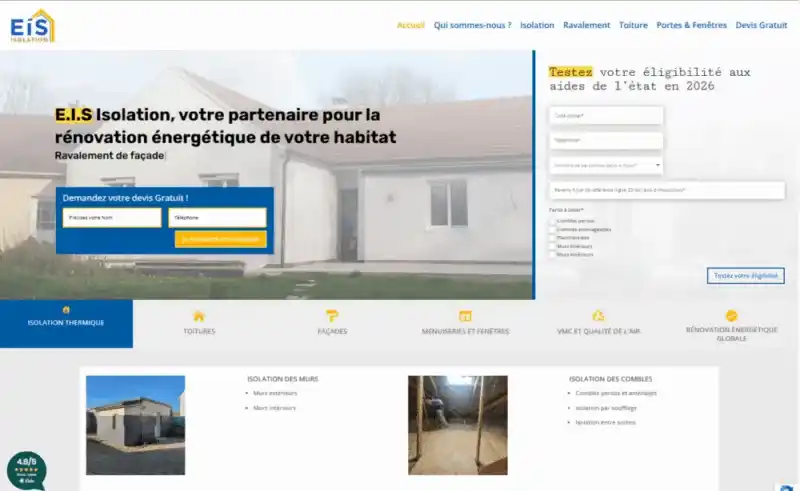
This image shows the E.I.S Rénovation site before its complete rebuild by Oli-via-net. It represents the strategic audit phase that precedes any work: analysis of the design, the SEO structure, technical performance and user experience. The visual highlights the limits of an unoptimised site — usability, slowness, inconsistent graphics — and introduces the five-step process leading to a fast, high-performing, conversion-focused site. It sets up the value the rebuild delivers: turning a functional but obsolete site into a genuine lever of digital growth.

AI search – GEO

Getting recommended by AI

ChatGPT, Perplexity and Gemini favour fast, well-structured sites. A badly built site is excluded from their recommendations.

Audit for a website build or rebuild project

Describe your project in a few lines and get a first read on its feasibility, its stakes and its growth potential.

  • Analysis of your objectives and constraints
  • Identification of functional and technical needs
  • Recommended solutions (CMS, structure, stack)
  • An estimate of resources and project scope

The aim is to secure the decisions upstream, avoid the common mistakes and lay a coherent base for the rest of the project.

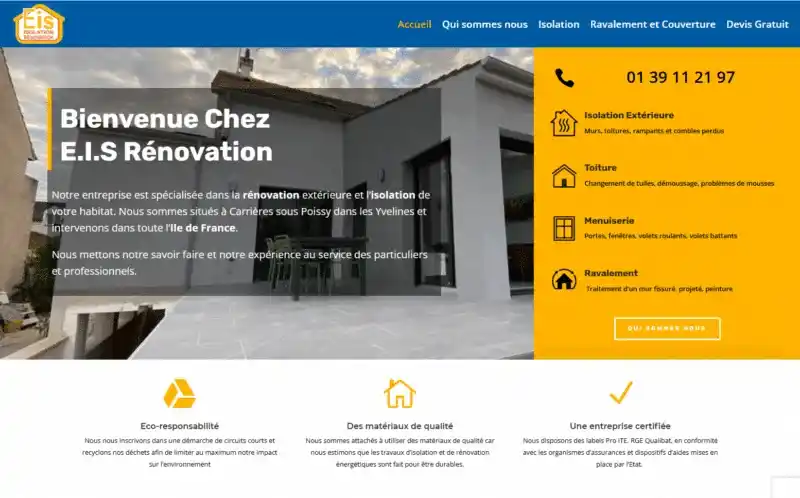
This image shows the E.I.S Rénovation site before its complete rebuild by Oli-via-net. It represents the strategic audit phase that precedes any work: analysis of the design, the SEO structure, technical performance and user experience. The visual highlights the limits of an unoptimised site — usability, slowness, inconsistent graphics — and introduces the five-step process leading to a fast, high-performing, conversion-focused site. It sets up the value the rebuild delivers: turning a functional but obsolete site into a genuine lever of digital growth.

A badly built site is expensive: traffic lost, conversions missed, total dependence on paid advertising. A well-designed site, by contrast, becomes an asset that generates qualified traffic, converts your visitors and reduces your acquisition costs.

We do not build “pretty sites”, we build conversion machines, optimised for Google and for generative AI. At Oli-via-net every site is built on 3 core pillars : technical performance, commercial effectiveness and scalability.

Load time < 2 seconds

  • Advanced optimisation: compressed WebP images
  • Lazy loading, minified code
  • CDN, intelligent caching
  • Premium hosting where needed

Technical SEO built in from day one

  • A structure built for Google: semantic HTML5 markup
  • Schema.org structured data, XML sitemap, optimised robots.txt
  • Core Web Vitals in the green

Mobile-first by design Designed for mobile first (60% of your traffic), then adapted for desktop — not the other way round.

Security & compliance

  • HTTPS mandatory
  • Automatic daily backups
  • Intrusion protection
  • Native GDPR compliance (cookie banner, privacy policy)

Strategic calls to action Visible buttons, short forms (5 fields maximum), persuasive messages, micro-interactions that reassure.

Persuasive, benefit-led content Copy written to convince, not just to inform. Customer-led copywriting: “what you gain” > “what we do”.

A modular, scalable architecture. New features are easy to add: blog, shop, member area, online booking, multilingual

Maintenance covered and responsive support. Regular updates (WordPress, plugins, security), automatic backups, responsive technical support

faster on mobile, on average After complete technical optimisation (images, cache, CDN, code)
more conversions after a UX rebuild Through simplified journeys, strategic CTAs and reduced friction
more organic traffic in 3 months The result of SEO built in from the design stage (architecture, technical, content)

Our four-step methodology

A well-built site is a measurable growth engine.
Our technical and UX rebuilds deliver gains in speed, in search visibility and in conversion, while reducing advertising costs.

Every project follows a structured five-step process to guarantee quality, meet deadlines and stay aligned with your business objectives. You are involved at every key stage, with regular sign-offs.

Step 1: Audit, strategy and design

Analysis of your ecosystem:

  • Audit of the current site (for a rebuild): SEO, technical, UX, conversions
  • Competitive benchmark (5 competitors analysed)
  • Definition of measurable business objectives (leads, sales, reputation)

Visual creation:

  • Choosing a suitable template, or desktop and mobile mock-ups of every page (depending on the project and the budget)
  • Brand guidelines where needed (colours, typography, iconography)
  • Sign-off at every stage (3 validation points)

Deliverables:

  • A complete, approved site structure plus wireframes of the key pages
  • A reasoned platform choice (WordPress, Shopify, Webflow, other)
  • A complete, approved design ready for development

Step 2: Development & technical optimisation

Technical development:

  • Building out the mock-ups, or adapting the template
  • Configuring an intuitive CMS (WordPress/Shopify/Webflow)
  • Technical SEO optimisation (tags, Schema.org, sitemap)

Performance & analytics:

  • Speed optimisation (WebP images, caching, CDN where needed)
  • GA4 and Google Tag Manager configuration
  • Setting up conversions and key events

Conversion optimisation:

  • Reassurance elements (testimonials, logos, certifications)
  • Strategic CTAs (buttons, forms, optimised journeys)

Step 3: Content & SEO

  • Optimising or writing the copy (depending on the package)
  • Adding text, images and video across every page
  • Unique, persuasive title tags and meta descriptions

For a rebuild:

  • 301 redirects to preserve your rankings
  • Checking that no traffic is lost after migration
  • During a rebuild we protect your current rankings by keeping the right URLs and restoring the important inbound and outbound links, so no visibility is lost.

Step 4: Testing, training & go-live

Exhaustive testing:

  • Across browsers and devices
  • Checking forms, features and tracking
  • Accessibility validation (WCAG 2.1)

Training & launch:

  • Personalised training (2 to 6 hours depending on the package)
  • Complete documentation plus video tutorials
  • Migration to production plus HTTPS certificate
  • Priority support for 1 month plus a 30-day review

90 % of sites go live without an SEO and AI search strategy.

The result: zero organic traffic, total dependence on paid advertising, and the investment wasted. SEO is not an option you add afterwards — it is the very foundation of the architecture.

Our approach: SEO is built in from the design stage.

A thematic silo structure Content organised logically by theme, to strengthen semantic authority

An optimised site structure Three clicks maximum to reach any page from the home page (the three-click rule)

Strategic internal linking Internal links designed to distribute authority towards the priority pages

Clean, descriptive URLs example.com/services/organic-search (not example.com/page?id=1234)

Breadcrumbs Secondary navigation that helps both Google and the user understand the structure

Optimised meta tags. Unique title tags (50-60 characters), persuasive meta descriptions (150-160 characters), a proper heading hierarchy

Schema.org structured data. JSON-LD markup for rich results in Google: FAQ, products, reviews, events, breadcrumb, organization.

An automatic XML sitemap. Generated and submitted automatically to Google Search Console.

An optimised robots.txt file. Precise control of Google’s crawl (which pages to index or exclude).

Canonical tags. Preventing internal duplicate content.

Clean 301 redirects. For a rebuild: every old URL redirected to the new one, with zero traffic lost.

LCP (Largest Contentful Paint) < 2.5s How long the largest visible element takes to load — a direct impact on Google rankings.

FID (First Input Delay) < 100ms How quickly the site responds to user interaction.

CLS (Cumulative Layout Shift) < 0.1 Visual stability (no content shifting while the page loads).

The technical optimisations we deploy:

  • Compressed WebP images plus lazy loading
  • Minified and deferred CSS/JS
  • Browser and server caching configured
  • A CDN (Content Delivery Network) for global distribution
  • Optimised premium hosting (SSD server, PHP 8+, HTTP/2)

The target: above 85 on PageSpeed Insights, mobile and desktop

Strategic keyword research. Identifying the queries with real potential (volume, intent, difficulty).

Content that matches search intent. Every page answers a specific search intent precisely: informational, navigational or transactional.

Semantic optimisation. A rich lexical field, natural co-occurrences, synonyms, common questions.

Compelling headings and a proper heading hierarchy. A single descriptive H1, with H2-H6 structuring the content logically.

Persuasive meta descriptions. Copy that makes people want to click in the Google results.

Whether you are a tradesperson, an online retailer or an established company, we have a package that fits your needs and your budget. Every project gets the same level of rigour: SEO built in, modern design, optimal performance and full training. For complex or specific projects, we build bespoke solutions.

Essential package — brochure site

From 2,800 €

Who is it for? Tradespeople, small businesses, independent professionals and associations that want a professional, effective presence online.


Included:

  • 5 to 8 pages (Home, Services, About, Work/Blog, Contact)
  • A modern responsive design (desktop, mobile and tablet)
    Complete on-page SEO (tags, structure, sitemap)
  • A secure contact form (anti-spam)
  • Google Analytics 4 and Tag Manager integration
  • CMS training (1 hour by video call)
  • 1 month of post-launch support (minor fixes)

Delivery time: 2 to 4 weeks

Platform: WordPress (optimised premium theme)

Performance package — premium brochure site

From 4,500 €

Who is it for? B2B companies, consultancies, agencies and brands that want a distinctive, high-performing site


Everything in the Essential package, plus:

  • 10 to 15 pages with a complex structure
  • A bespoke premium design (a unique visual identity)
  • Advanced technical SEO plus structured data
  • Complete Schema.org markup
  • An integrated blog with categories and tags
  • Advanced animations and interactions (scroll, hover, transitions)
  • Deep speed optimisation: <2s guaranteed (WebP images, CDN, advanced caching)
  • CRM connection available (HubSpot, Pipedrive, Salesforce)
  • Full training (4 hours) plus personalised documentation
  • 2 months of priority support

Delivery time: 6 to 8 weeks

E-commerce package — Shopify / WooCommerce store

From 5,500 €

Who is it for? Online retailers, brands and physical shops that want to sell online.


Included:

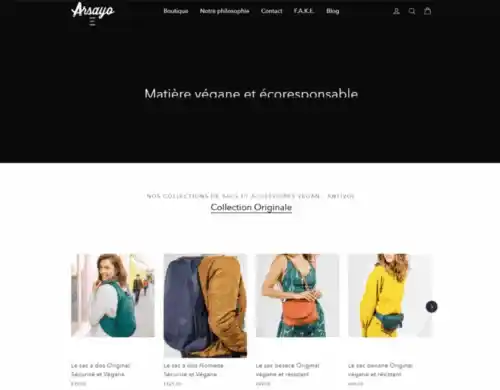
Client case: Arsayo — UX rebuild & complete optimisation

From a standard Shopify store to an optimised user experience

Tracking was faulty (no structured GTM, no Consent Mode), and SEO remained basic despite the brand’s potential.
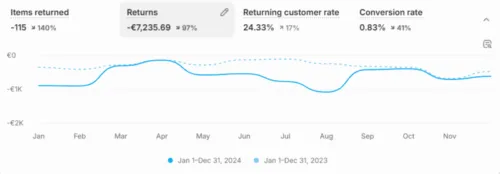
Screenshot of the Shopify e-commerce statistics before the Arsayo rebuild, showing a low conversion rate and a high basket abandonment rate.

Arsayo had a functional but under-optimised Shopify store. The basic template design did not show the products off, navigation was confusing (no way to filter by colour on the thumbnails, organised by collection rather than by product type), and the product pages lacked storytelling.

  • A basic, uncustomised template design
  • Confusing navigation, no way to filter by colour on thumbnails
  • Thin product pages with no storytelling and no customer benefits
  • No structured tracking (no GTM, no Consent Mode)
  • Basic SEO: zero Schema.org structured data
  • Conversion rate: 0.9%
  • Basket abandonment rate: 76%
  • Organic traffic: 380 visits a month
  • Google Ads CPA: 142 € | ROAS: 2.3
  • Conversion rate: 0.9%
  • Basket abandonment rate: 76%
  • Bounce rate: 68% Average basket: 81 €
  • Unsuitable UX : an unoptimised customer journey, excessive friction, no way to filter colours on thumbnails
  • No persuasion strategy : no AIDA structure (Attention, Interest, Desire, Action), no SONCASE application
  • Weak product pages : average photos, technical descriptions with no storytelling and no customer benefits
  • No social proof : zero visible customer reviews, no trust badges, no testimonials
  • Faulty tracking : conversions badly configured, no structured GTM, no Consent Mode
  • SEO left untapped : zero structured data, unoptimised content, opportunities missed

Results 4 months after the rebuild

What we deployed (March → May 2024) :

A complete UX rebuild using AIDA and SONCASE, enriched product pages (photo shoot, responsive design, Google reviews), and a simplified checkout.

Structured GTM plus Consent Mode V2 installed (recovering 40% of lost conversions) and server-side tracking.

SEO optimisation: Schema.org structured data, star rich snippets, 50 product pages plus 2 guides and 8 blog articles.

  • Load time: 4,2s → 1,9s.
  • Conversions: Rate 3.1% (+244%), basket abandonment 41% (-46%), average basket 68 € (+33%)
  • SEO: Traffic 1,340 visits a month (+253%), 17 keywords in Google’s top 10 (against 0), CTR +34% through rich snippets
  • Google Ads: CPA 31 € (-78%), ROAS 9.2 (×4), conversions 156 a month (+359%)
  • Business: Revenue +192% (29,800 € a month), repeat customers 26% (against 9%)
100% satisfied clients
Juliette

I am delighted to have trusted Oli-via-net with the rebuild of my site. A very professional agency that adapted to my business and to the size of the company. I recommend them.

Hervé Chaussin

I asked Nicolas to build a website for my company from scratch and I am very happy with the result. Nicolas listens and understood what I wanted very quickly.
I highly recommend him.

SARL Liberum

Great advice, highly competent and always available! I also really appreciated his expertise in SEO and automation, which helped me gain visibility and efficiency.

Authentic reviews, verifiable on our Google Business Profile.

Frequently asked questions on website creation & redesign

Building or rebuilding a website is a strategic investment. Between the choice of technology, the timescales, the costs and the results expected, it is normal to have questions before starting. This FAQ answers the most common questions on building and rebuilding websites — WordPress, Shopify, Webflow — to help you make the right decisions, avoid costly mistakes and maximise the return on your project.

Budget and profitability

Answer: Because “a site” means nothing on its own — everything depends on what is included and how well it is executed.

A 500-1,500 € site (uncustomised template):

  • A basic WordPress or Wix template installed in 2-3 hours
  • No design customisation (you look like 10,000 other sites)
  • No SEO (generic tags, no strategy)
  • No follow-up or support after delivery
  • Who for: a quick test, a temporary project, an extremely tight budget

A 2,500-5,000 € site (professionally customised template):

  • A premium template customised to 70-80%
  • SEO built in from the design stage (tags, structure, sitemap)
  • A responsive design optimised for mobile
  • Training plus 1 month of support
  • Who for: small businesses, tradespeople, independent professionals

A 5,000-12,000 € site (bespoke or e-commerce):

  • A unique design, or a complete online store
  • Advanced technical SEO (Schema.org, structured data)
  • A conversion UX strategy, GA4/GTM tracking
  • Full training plus 2-3 months of support
  • Who for: mid-sized companies, brands, serious e-commerce

A 10,000-30,000 €+ site (a complex project):

  • Bespoke development (member area, API, marketplace)
  • An advanced technical architecture
  • A complete digital strategy
  • Who for: startups, scale-ups, innovative projects

The real hidden cost of a cheap site: you pay twice. Once for the site that failed, and again 12-18 months later to rebuild it properly, because it does not convert and Google cannot find you.

At Oli-via-net, complete transparency from the free audit onwards : you know exactly what is included, line by line, and why it costs what it costs.

Answer: It depends on your business model and your acquisition strategy, but here are the average timelines we observe:

E-commerce (direct online sales):

  • With Google Ads or Meta advertising from day one : profitability is possible within 2-4 months if the product is validated and the margin is sound
  • With SEO alone : 6-12 months, the time it takes Google to rank you and organic traffic to build
  • A mix of SEO and paid search : 3-6 months — paid search funds immediate growth while SEO builds

A brochure site generating leads (B2B, services):

  • With local Google Maps ranking : 2-6 months (you appear quickly on local queries)
  • With classic SEO : 4-9 months (gradual ranking on your trade keywords)
  • With Google Ads campaigns : 1-3 months (immediate leads if well targeted)

What speeds it up:

  • A site optimised for conversion (2-4% rate against 0.5-1% for an average site) → profitability two to three times faster
  • SEO content from launch (blog, guides) → organic traffic arrives sooner
  • Well-configured ad campaigns → qualified leads from week one

A concrete example: a consultancy rebuilds its site and adds local SEO → 4 qualified leads a month from month 3, against zero before → 2 clients signed → 18,000 € of revenue → the 4,500 € site investment repaid in 4 months.

Our goal at Oli-via-net: the investment repaid within 6-12 months at most , through a combination of organic traffic and optimised conversion.

Mandatory technical costs:

  • Hosting : 10 to 50 € a month (Shopify: 29-299 $ a month)
  • Domain name : 10-20 € a year (.fr, .com)
  • SSL certificate : free (Let’s Encrypt) or included with hosting
  • Automatic backups : often included with premium hosting, otherwise 5-15 € a month

Tool and plugin costs (WordPress):

  • A premium theme : 60-200 € one-off, OR 50-100 € a year on subscription
  • Essential plugins : SEO (Rank Math free / Yoast Premium 99 € a year), caching (WP Rocket 49 € a year), forms (Gravity Forms 59 € a year)
  • Total plugins : 0-300 € a year depending on needs

Shopify-specific costs:

  • Subscription : 348-3,588 $ a year (Basic to Advanced plan)
  • Paid apps : customer reviews, basket recovery, email marketing → 20-100 $ a month
  • Transaction fees : 2% if you do not use Shopify Payments

Maintenance and updates:

  • Managing WordPress yourself : 0 € but 1-2 hours a month of your time (updates, backups, security)
  • Maintenance outsourced : 50-200 € a month depending on the level, basic to premium

Ongoing content and SEO:

  • Blog and guide writing : 80-200 € an article depending on quality
  • SEO optimisation : 200-800 € a month with agency support

A realistic total budget for year one after the build:

  • A WordPress brochure site : 300-800 € a year (hosting + domain + plugins)
  • A brochure site with maintenance : 900-2,500 € a year
  • A Shopify store : 1,200-4,000 € a year (subscription + apps)
  • E-commerce plus SEO and paid search support : 3,000-10,000 € a year
Timescales and process

Answer: Because a professional site that converts and ranks requires a structured process — not just installing a template and dropping in some text.

What actually happens over those 6-8 weeks:

Week 1 — audit & strategy (invisible but critical):

  • Competitive analysis (5-10 competitors benchmarked)
  • SEO keyword research (identifying the queries with real potential)
  • Defining personas and customer journeys
  • Site architecture (a structure optimised for SEO and conversion)
  • Wireframes (page structure before design)

Weeks 2-3 — design & UX:

  • Desktop and mobile mock-ups of EVERY page
  • 3 sign-off points with you (unlimited adjustments until approval)
  • Designing the conversion elements (CTAs, forms, reassurance)

Weeks 3-5 — technical development:

  • Pixel-perfect build of the mock-ups
  • CMS configuration (WordPress/Shopify/Webflow)
  • Technical SEO optimisation (tags, Schema.org, sitemap)
  • Performance optimisation (WebP images, caching, CDN)
  • GA4, GTM and conversion tracking installed

Weeks 4-6 — content & SEO:

  • Optimising or writing the copy (structure, keywords, persuasion)
  • Adding the content (text, images, video)
  • Strategic internal linking
  • Configuring 301 redirects for a rebuild

Week 6 — testing & training:

  • Testing across browsers and devices
  • Checking forms, features and tracking
  • Personalised training, 2-6 hours
  • Migration and go-live
  • Intensive monitoring for 7 days after launch

What your cousin does in 3 days:

  • Installs a free WordPress or Wix template
  • Copies and pastes your text with no optimisation
  • Adds 3-4 photos
  • No SEO strategy (generic tags: “Home”, “Services”)
  • No tracking configured
  • No thorough testing

Where you are at 6 months:

  • The cousin’s site: 20 visits a month, zero conversions, invisible on Google
  • A professional site: 300-800 visits a month, a 2-4% conversion rate, top 10 on Google for strategic keywords

The time “lost” upfront is time gained in profitability. A well-conceived site produces 5 to 10 times more than one thrown together.

Answer:Yes, but with trade-offs to accept.

An express timeline is possible: 3-4 weeks against 6-8 as standard

What gets sacrificed in express mode:

  • A reduced research phase (a lighter competitive benchmark, no exhaustive keyword research)
  • A design on a premium template (nothing bespoke)
  • Content supplied by the client (no copywriting by the agency)
  • A single sign-off (not 3 validation points)
  • Shorter training (2 hours against 4-6)

What is kept (non-negotiable):

  • Technical SEO built in (tags, structure, sitemap)
  • Optimised performance (<2s load time)
  • Mobile responsive
  • GA4 and GTM tracking
  • Cross-device testing

Express surcharge: +20-30% of the price (your project prioritised, the team mobilised)

What we recommend: if you have a fixed date — a trade show in 45 days — a well-made express site beats a “perfect” one delivered too late. You can enrich it afterwards: blog, additional content, advanced SEO work.

An ultra-fast landing page alternative (1 week): if the urgency is extreme, we can deliver a one-page landing page optimised for conversion in 7 days (Framer or Webflow), then develop the full site afterwards.

Answer: At first glance the all-in-one platforms look cheaper, but they can create significant hidden costs over the long run:

Scalability costs: If your needs change — complex features, multilingual, API connections — these platforms impose technical limits or very expensive premium subscriptions .

Marketing costs: A technically limited site needs far bigger advertising budgets to compensate for poor organic search visibility (SEO).

Migration costs: If you change later, migrating a Wix or Squarespace site to an open solution such as WordPress is often impossible without rebuilding from scratch, losing the whole initial investment. We steer you towards the most durable and scalable solution from the outset, so you control your costs over five years rather than five months.

Design and user experience

Answer: You approve the design BEFORE any development — not a line of code is written until you have signed off the mock-ups.

Our three-step design sign-off process:

Step 1 — a detailed creative brief (week 1):

  • The sites you like (we analyse what appeals to you)
  • Your competitors (we identify how to set you apart)
  • Your existing brand guidelines (colours, typefaces, logo)
  • The tone you want (understated and modern, energetic, luxury, accessible and so on)

Step 2 — high-fidelity mock-ups (weeks 2-3):

  • A complete design of every page, desktop and mobile
  • Sign-off 1 (home page) : you approve the overall art direction
  • Sign-off 2 (inner pages) : you approve the overall coherence
  • Sign-off 3 (final adjustments) : the last details before development

Step 3 — unlimited adjustments until final approval:

  • You do not like a colour? We change it
  • A button in the wrong place? We move it
  • A section that needs rework? We redo it

You only pay for development once you have approved the design 100%. No surprises, and no “sorry, that is how it is now that it is built”.

Special cases:

  • You have no idea what design you want : we show you 5-10 reference sites in your sector, you say what you like and dislike, and we build from your preferences
  • You have strict brand guidelines : we follow them 100% (Pantone colours, corporate typefaces, layout grid)

At Oli-via-net, 98% of designs are approved at V1 or V2 — a well-made initial brief avoids 90% of the back and forth.

Answer: Unlimited adjustments during the design phase. Reasonable changes during development. Bug fixes always free.

Phase 1 — design (mock-ups): UNLIMITED

  • You do not like a colour, a typeface, a position? We change it at no extra cost
  • You want to try 3 versions of a section? We do it
  • You change your mind about a page structure? We adapt

The aim: 100% approval before development so nothing has to be rebuilt later

Phase 2 — development: reasonable changes included

  • Adjusting text, images and colours: included
  • Moving elements slightly: included
  • Bug fixes (an element that displays badly, a broken link): always included

What becomes chargeable (outside the original scope):

  • Adding pages not in the quote (a new section, a new feature)
  • Completely reworking a page already approved at mock-up stage
  • Developing additional features (a calculator, a booking system)
  • External integrations not planned for (APIs, third-party tools)

Rate for changes outside the package: 80-120 € an hour depending on complexity

Our philosophy: we would rather spend the time in the design phase getting everything approved than bill for adjustments afterwards. 98% of our projects finish with no budget overrun at all.

Answer: Because AI generates a generic site in an hour — not a site that converts and ranks.

What AI does well (time saved):

  • Generating a basic structure (the classic sections: hero, services, contact)
  • Writing filler copy (generic, and not SEO-optimised)
  • Producing an automatic responsive layout
  • Creating a simple logo or visuals with DALL-E or Midjourney

What AI does NOT do — and what it costs when it goes wrong:

SEO strategy : AI writes generic title tags (“Home”, “Services”) → zero organic traffic ❌ Optimised conversion : AI does not know YOUR customer, YOUR objections, YOUR market → conversion rate <0.5% ❌ Differentiation : 10,000 AI-built sites look alike (identical templates) → you are invisible ❌ Reliable tracking : AI does not install GA4, GTM and Consent Mode V2 correctly → you are flying blind ❌ Technical performance : unoptimised images, unminified code → a slow site (4-6s) → 50% of visitors leave


What an AI-only site actually produces after 6 months:

  • Organic traffic: 10-30 visits a month (invisible on Google)
  • Conversions: 0-2 a month (rate <0.3%)
  • Time lost trying to fix it: 20-40 hours
  • You call a professional anyway → twice the cost in the end

What an agency-built site produces after 6 months:

  • Organic traffic: 300-800 visits a month
  • Conversions: 15-50 a month (rate 2-4%)
  • You get to focus on your business

Our hybrid approach (the best of both):

  • AI to go faster : generating the initial structure, suggesting copy, automating technical optimisation
  • Humans for strategy : keyword research, conversion UX, distinctive design, clean tracking
  • The result: 20-30% less time (5 weeks against 6-8) with NO compromise on quality

AI is a powerful tool — but it does not replace strategic expertise. If it did, every AI-built site would be profitable, and they are not.

Self-sufficiency and maintenance

Answer: You will be 100% self-sufficient on everyday changes — that is the whole point of a modern CMS.

What you do on your own after training, without calling us:

✅ Change text, headings and paragraphs on every page ✅ Add, remove or change images ✅ Create new pages (services, blog articles, products) ✅ Manage the navigation menus ✅ Change the contact forms ✅ Write and schedule blog articles ✅ E-commerce : add products, manage stock, prices, promotions and orders

What you call us for (technical changes):

❌ Rebuilding a whole section (a changed structure) ❌ Adding complex features (a calculator, a booking system) ❌ External API integrations (CRM, trade tools) ❌ Advanced CSS or code changes ❌ Fixing technical bugs

Training included:

  • A personalised session of 2-6 hours depending on the package
  • Complete documentation with screenshots
  • Video tutorials for everyday tasks
  • Access to an online knowledge base

After training, the average self-sufficiency rate is 92% — you call us once or twice a year at most, for specific needs.

If you are really not comfortable with computers: we offer maintenance packages with changes included, from 80 € a month.

Answer: It depends on whether you have taken out maintenance.

Without maintenance (site delivered, you manage it):

  • You are responsible for updates (WordPress, plugins, security)
  • If the site is hacked or down: work billed by the hour (120-150 €/h)
  • Restoration from a backup, if you have set one up

With Oli-via-net maintenance (from 80 € a month):

  • Automatic daily backups (30 days of history)
  • Regular updates : WordPress, plugins, security
  • Uptime monitoring : we are alerted if the site becomes unreachable
  • Priority intervention : the problem resolved within 4 working hours
  • Protection against hacking : firewall, malware detection, SSL certificate kept up to date

The three most common failures:

  1. An incompatible plugin after an update (60% of WordPress failures) → With maintenance, we test updates on a staging environment before production
  2. A hacked site (malware injection, spam redirects) → With maintenance, detection within 24 hours, clean-up plus security hardening
  3. Saturated hosting (a sudden traffic spike) → With maintenance, we optimise resources or migrate to higher-tier hosting

The Shopify case: failure is close to impossible (infrastructure managed by Shopify with 99.98% uptime). If there is a problem, Shopify support is available around the clock.

What we recommend: maintenance is insurance. For 80-150 € a month you sleep easy and focus on your business.

Answer: No. You own your site 100% — code, content, domain name, everything belongs to you.

At delivery you receive:

  • ✅ Full admin access to your site (super-administrator)
  • ✅ FTP access to the hosting (the site files)
  • ✅ Database access (a complete backup)
  • ✅ Ownership of the domain name (registered in your name)
  • ✅ Access to Google Analytics, Search Console and Tag Manager
  • ✅ The source code for any custom development

You can leave whenever you want:

  • Export your complete site (a .zip or SQL backup)
  • Migrate to any host
  • Hand maintenance to another agency
  • Bring management in-house

The one Shopify limit: you depend on the Shopify platform, though you can export your customer and product data and migrate to WooCommerce if needed — we handle those migrations.

Be wary of agencies that: ❌ Register the domain name in their own name (you do not own it) ❌ Refuse to give FTP or database access ❌ Charge a “release” fee if you leave ❌ Host on their own server with no access for you

At Oli-via-net, complete transparency : you own it from day one, we are simply the supplier. If you leave, we make the transition easy (a full export plus documentation for the new agency).

Results and performance

Answer: Because Google does not rank on beauty but on relevance, authority and technical performance.

The four main reasons:

1. Their site is older (authority built over time)

  • Their domain has existed since 2015, yours since 2024
  • Google trusts established sites (a clean history is a bonus)
  • The fix: patience plus regular content — you will catch up in 12-18 months

2. They have more backlinks (external authority)

  • 150 external sites link to them, you have 8
  • Google reads those as votes of confidence
  • The fix: a link-building strategy (earning links from quality sites)

3. They have more SEO-optimised content

  • 80 indexed pages against your 12
  • An active blog for 3 years, with 60 articles
  • The fix: publish 2-4 articles a month, buying guides, rich FAQs

4. Their technical SEO is better, however ugly the design

  • Optimised title tags and meta descriptions on every page
  • Complete Schema.org structured data
  • Load time <2s
  • Your site: good-looking but with generic tags, slow, zero Schema.org

The uncomfortable truth: an “ugly” but technically perfect site beats a “beautiful” one with failed SEO.

Our approach: modern design AND impeccable technical SEO from day one. You should never have to choose between the two.

Answer: Ask them these five questions — if they dodge or answer vaguely, change agency.

Question 1: “Show me my Google positions in detail, month by month”

  • ✅ A good agency: a Search Console table showing 20-30 keywords and how their positions have moved
  • ❌ A bad agency: “It’s progressing nicely”, with no concrete figures

Question 2: “What is my actual conversion rate and how is it changing?”

  • ✅ A good agency: “2.3% this month against 1.8% last month”, with GA4 access
  • ❌ A bad agency: “You have plenty of visitors” — a vanity metric

Question 3: “What concrete optimisations did you make this month?”

  • ✅ A good agency: a detailed list (new articles, technical fixes, backlinks earned)
  • ❌ A bad agency: “We’re monitoring, all is well” — meaning nothing was done

Question 4: “Show me admin access to my site and my analytics tools”

  • ✅ A good agency: gives you access immediately (you own it)
  • ❌ A bad agency: “No need, we handle it” — you are locked in

Question 5: “What is my digital ROI: how much invested against how much generated?”

❌ A bad agency: talks only about traffic and impressions, never revenue

✅ A good agency: “8,000 € invested, 47 leads generated, 12 clients = 38,000 € revenue → ROI ×4.75”

Answer : A realistic timeline: 9-18 months to overtake field sales and cold calling — but it depends on your sector.

Sectors where digital overtakes quickly (6-12 months):

  • E-commerce (traffic to direct sale, no intermediary)
  • Local B2B services (plumber, electrician, coach): local search is powerful
  • Training and info-products: SEO traffic into an automated funnel

Sectors where digital complements rather than replaces (12-24 months):

  • Complex B2B (long cycles, collective decisions)
  • Luxury and premium (trust is built by people)
  • Professional services (lawyer, architect): digital generates leads, humans close

A typical timeline for a B2B services brochure site:

Months 1-3: Almost no digital revenue

  • The site is indexed progressively
  • First Google positions on page 2-3
  • 5-15 contact requests a month (not well qualified)

Months 4-9: First meaningful revenue (20-40% of the total)

  • Top 10 positions on secondary keywords
  • 15-40 requests a month (better qualified)
  • 3-8 clients signed through the site

Months 10-18: Digital becomes the main channel (50-70% of revenue)

  • Top 3-5 positions on strategic keywords
  • 40-80 requests a month
  • Conversion rate stabilised at 3-6%
  • Field sales closes, digital prospects

Month 18 onwards: Digital overtakes sales (70-85% of revenue)

  • SEO authority established
  • Organic traffic steady and growing
  • You cut back on expensive sales activity (trade shows, cold calling)

What speeds it up:

✅ An initial ad budget (Google Ads) → immediate leads while SEO builds ✅ Regular content (2-4 articles a month) → SEO authority faster ✅ Active link building → top 3-5 positions from months 6-9 ✅ Optimised conversion → every visit worth two to three times more

The fatal mistake: expecting it to “work by itself” without feeding the site — content, optimisation, advertising. A site with no acquisition strategy is dead investment.

A realistic goal: the site as channel number one within 18 months, if the strategy is executed properly.

Security, legal matters and traps to avoid

Answer: Unfortunately, the lack of regulation in the web sector attracts some unserious operators. Here are the 8 red flags to watch for.

🚩 Red flag 1: An abnormally low price with no justification “Complete e-commerce site, 800 €” → it is impossible to deliver quality work at that price. You will get an uncustomised template, no SEO and plenty of bugs.

🚩 Red flag 2: Unrealistic SEO promises “Guaranteed first on Google in 2 weeks” → a lie. Nobody controls Google. The realistic timeline is 3-9 months depending on competition.

🚩 Red flag 3: No detailed written contract A verbal agreement or a vague quote gives you no protection in a dispute. Insist on a contract setting out the scope, timescales, deliverables and payment terms.

🚩 Red flag 4: 100% payment demanded before delivery A classic scam: you pay, they vanish. The normal split is 30-40% deposit, 30-40% on design approval, 30% on delivery.

🚩 Red flag 5: Refusal to give you admin or FTP access You must own your site. Access refused means you are locked in.

🚩 Red flag 6: The domain name bought in their name The domain must be in YOUR name from day one. Otherwise they can block your site in a dispute.

🚩 Red flag 7: No verifiable portfolio “We have built 200 sites” but no example shown, or the sites do not exist or look terrible → invented.

🚩 Red flag 8: Vague communication, disappearances Replies once a week, never meets the deadlines announced, permanent excuses → walk away.


A safety checklist before you sign:

✅ A detailed written contract (services, timescales, price, cancellation terms)

✅ A verifiable portfolio (live sites you can visit)

✅ Authentic Google or Trustpilot reviews (not five 5-star reviews in one week)

✅ A verifiable company registration

✅ A reasonable payment schedule (never 100% up front)

✅ A written ownership guarantee (you will be admin and own the domain)

✅ A committed delivery date with penalties for lateness

✅ Transparent communication (fast replies, regular reports)

At Oli-via-net:

  • A detailed contract, always
  • A verifiable 15-year portfolio
  • Google reviews 5/5
  • Staged payment
  • You own it 100%
  • A 30-day satisfaction guarantee

Answer: Yes, content theft is common — but you are protected by law.

What is protected automatically (copyright):

  • Your original text (protected from the moment it is created, with no registration)
  • Your original photos (watermark and EXIF metadata recommended)
  • Your design if it is distinctive (design registration recommended)

What to do when you spot a copy:

Step 1 — evidence: dated screenshots, a Wayback Machine archive, a side-by-side comparison

Step 2 — formal notice (48-72h): an email or recorded letter demanding immediate removal. In 60% of cases that is enough.

Step 3 — a DMCA notice if the host is foreign: a free form to the host, removal within 24-72 hours

Step 4 — legal action if it persists: infringement plus unfair competition, with fines of up to 300,000 €

Effective prevention:

  • A “© 2025 [Company]. All rights reserved” notice
  • Google Alerts on your key phrases
  • Unique text (never copy a competitor)

At Oli-via-net: protective notices included, plus assistance if content is stolen (a template formal notice provided).

Answer : You are civilly liable even as a victim — which is why security matters.

Common attacks:

  • Phishing : a fake payment page steals visitors’ card details
  • Malicious redirects : visitors sent to a scam site
  • Spam : emails sent from your server
  • Prices altered : products at 1 € on an online store, which you are legally bound to honour

Your legal liability:

  • Civil : compensating victims (stolen card details, distress, legal fees)
  • Criminal : in cases of gross negligence (a site never updated, weak passwords)
  • Google : blacklisted for 2-6 weeks, 80-100% of traffic lost

How to protect yourself: ✅ Regular updates (WordPress, plugins, PHP) ✅ Strong passwords plus two-factor authentication ✅ Automatic daily backups ✅ SSL certificate plus firewall (Cloudflare, Wordfence) ✅ Security monitoring (intrusion detection)

If the site is hacked (emergency):

  1. Isolate : put the site into maintenance mode immediately
  2. Clean : scan for malware, delete the infected files
  3. Secure : change every password, fix the vulnerability
  4. Restore : from a clean backup
  5. Google : request a review in Search Console

Cyber insurance recommended: 200-500 € a year, covering clean-up costs and damages to victims

At Oli-via-net: security maintenance is included in our packages (updates, firewall, monitoring, intervention within 4 hours if you are hacked).

Do you have a project in mind, a site to improve, or simply questions about the right strategy?

We help companies across France — from Paris to Perpignan — grow their visibility, attract more prospects and win more clients through their website.

Our goal: to turn your site into a genuine growth lever, measurable and profitable.

Fill in the form: we come back to you within 24 hours.