Oli-via-net — SEO, AI search optimisation (GEO) and conversational AI visibility (ChatGPT, Gemini, Perplexity, DeepSeek...)

Google SEO and AI search optimisation: two complementary growth levers

Organic search is still the acquisition channel that delivers the most qualified traffic. But search behaviour is changing fast. Some of your prospects now ask ChatGPT, Gemini or Perplexity before they ever open Google.

For more than 15 years Oli-via-net has been running digital marketing for companies in e-commerce, construction and B2B services.

As a Google Partner agency, we work with certified Google Ads specialists.
  • 72 sites ranked
  • Number 1 on ChatGPT
Illustration of organic search and AI search optimisation combining Google, ChatGPT and Gemini, representing the new generation of intelligent search by Oli-via-net.
Official Google logo used to illustrate organic search (SEO).
ChatGPT logo illustrating conversational AI search optimisation delivered by Oli-via-net.
Google Gemini logo illustrating visibility inside AI search engines.
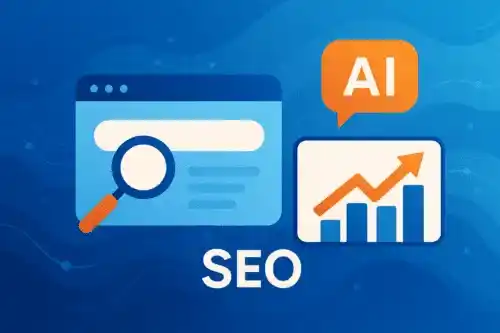
SEO and AI illustration representing the optimisation of organic search and AI engines such as Google, ChatGPT and Gemini.

A tailored SEO strategy, built around what your business actually needs

At Oli-via-net, we help you pick the approach that fits your business, your goals and your budget.

  • Classic SEO to rank at the top of Google
  • AI search optimisation to get cited by AI assistants (ChatGPT, Gemini, Perplexity and more)
  • SEO + AI search to maximise visibility across every channel

Our expertise combines technical SEO and generative engine optimisation (GEO), two complementary approaches that grow your customer acquisition.

Let's hit your growth targets together

We work with companies of every size: small businesses, mid-market, large accounts and startups.

Oli-via-net, an SEO agency — specialists in organic Google search

What does an organic search (SEO) agency actually do?

Here is one of our clients, Ci Renovation, ranking on page one in the Yvelines area:
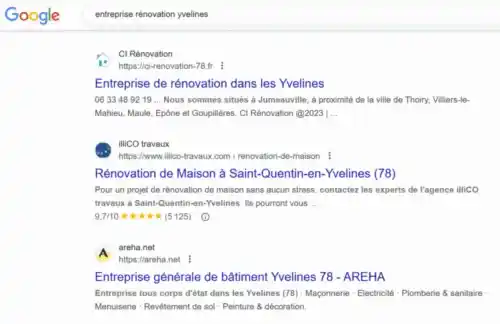
Google search result showing CI Renovation on page one for the query

Without visibility on Google you miss most of your prospects. Classic SEO remains the cornerstone of any effective digital strategy.

Our analysis relies on the best tools on the market: SEMrush, Ahrefs, Majestic, Google Analytics, Moz, PageSpeed Insights, Ranxplorer and others. Our SEO approach rests on three core pillars :

  • Fast, mobile-optimised and accessible sites
  • Clear structure and architecture with strong internal linking
  • Security (HTTPS, GDPR) and structured data to build trust
  • Pages optimised for your strategic keywords
  • Quality content that answers real search intent
  • Copywriting built for conversion and user experience
  • Acquiring quality links (backlinks)
  • Trust signals and online reputation
  • Building lasting authority in your sector

How our SEO + AI search agency works

When AI reshuffles the search deck: the new winning combination

Ignoring Google means missing most of your prospects. Ignoring conversational AI such as ChatGPT or Gemini means missing a generational shift — people who would rather talk to an AI than scroll through Google results:

  • 8.5 billion searches a day on Google worldwide
  • ChatGPT has 800 million active users

Whether you need an agency to build your website, want to strengthen your organic Google rankings, explore AI search opportunities, or combine both, we walk you through it step by step.

Un robot jouant aux échecs avec un humain symbolisant la stratégie entre SEO et intelligence artificielle, illustrant la nouvelle alliance entre Google et les IA comme ChatGPT ou Gemini.
Of online searches in France go through Google.
Of professionals use AI assistants for research.
Of online searches will be generated by artificial intelligence by 2027

Free SEO & AI search audit

Get a personalised analysis of your site in under 48h.

  • A clear diagnosis (technical, content, visibility).
  • 3 priority actions to improve your results.
  • Advice matched to your sector and your budget.
Illustration of a free SEO and AI search audit, with a magnifying glass and a growth chart representing the analysis of organic search and artificial intelligence.

Example of AI search visibility on ChatGPT

Our SEO and AI search agency — a real case

More and more prospects ask an AI before they ever open Google.

Watch this video: when you ask ChatGPT "Which bathroom renovation company in Paris would you recommend?", the first name it gives is "Les Bains et Cuisines d'Alexandre", our client.

Another ChatGPT example: Arsayo comes up among the first results when you ask "What is the best French brand of anti-theft backpacks? " or "Name 10 backpack brands for city use"

We structure your content so that it is understood, reused and recommended by conversational AI engines (ChatGPT, Gemini, Perplexity, Claude and others).

AI search optimisation rests on 3 technical levers:

  • Natural question-and-answer writing (thorough FAQs)
  • Detailed sector glossaries
  • Step-by-step practical guides
  • Formats that match how AI engines parse and restate information
  • Complete Schema.org markup (Organization, LocalBusiness, Product, Service, FAQ, HowTo)
  • JSON-LD tuned to make context easy for AI engines to read
  • Semantic enrichment of named entities
  • Proof of expertise through detailed case studies
  • Publishing reference content in your sector
  • Showcasing your certifications and delivered work
  • Transparency about your team and your processes
  • Your customer reviews (Google Business Profile, LinkedIn, Trustpilot and others)

Our SEO & AI search methodology is built on four pillars: audit, optimisation, content and monitoring.

It combines organic search, artificial intelligence and structured data to strengthen your visibility on Google and inside conversational AI (GEO) such as ChatGPT, Perplexity or Gemini.

The goal: lasting positions, stronger authority (E-E-A-T) and qualified organic traffic.
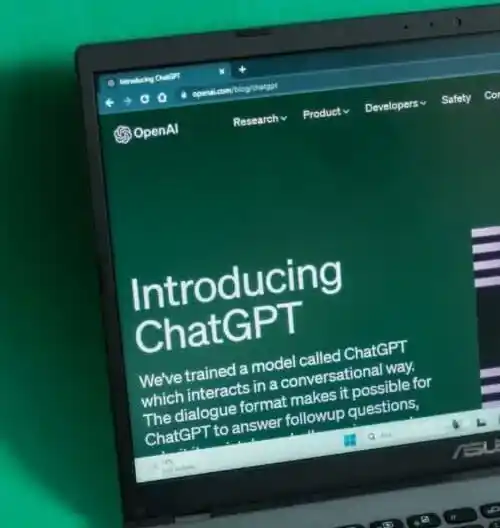
Écran affichant “Introducing ChatGPT”, illustrant la méthode SEO IA d’Oli-via-net combinant intelligence artificielle et référencement naturel pour performer en 2026.

Step 1 — Full SEO / AI audit:

  • Clear definition of your business goals and KPIs
  • Complete technical review (speed, security, indexing)
  • Content & keyword position analysis
  • Digital presence & AI visibility analysis (ChatGPT, Gemini and others)
  • Competitive analysis and opportunities
  • Estimated running costs

Step 2 — Optimisation:

  • Priority technical SEO fixes
  • Performance improvements
  • Metadata, tags and image alt text
  • Implementing Schema.org and structured data
  • Building and optimising theindex map
  • Stronger internal linking & clean URL structure

Step 3 — Content production:

  • Enriching existing content and creating new pages
  • Writing blog articles optimised for SEO and AI search
  • Targeted link building, including through the Oli-via-net network
  • Copy written for E-E-A-T and trust signals
  • Adding proof of expertise & reassurance elements

Step 4 — Monitoring & adjustments:

  • Detailed monthly multi-channel reporting
  • Tracking of Google positions & organic traffic
  • Measuring leads, conversions and ROI
  • A/B testing and continuous optimisation
  • Roadmap of actions and monthly prioritisation

100% satisfied clients

Tony Lecoin

Oli-via-net helped us grow our presence online by building our website and improving our Google rankings. Nicolas is responsive, professional and gives excellent advice. We highly recommend his services

Grégory Martin

Nicolas guided me well in optimising my website. Good advice on building a solid, coherent digital presence that fits the sector and technological change such as AI.

Arie Toledano

It is a real pleasure to work with people who are efficient and responsive
we have been working together for more than three years and I am still satisfied

Read the client reviews published on our Google Business Profile.

Frequently asked questions — Google SEO & AI search

Before working with an agency it is normal to have questions: timelines, pricing, methodology, results, and what SEO and AI search really involve. This FAQ answers them clearly and sums up how we work: transparency, close collaboration and measurable performance.

Understanding SEO and AI search optimisation

Answer: There are several reasons a site may be partly or entirely absent from Google.

An indexing problem: Your robots.txt file may be blocking Google's crawlers, or a "noindex" tag may be preventing indexing. Check in Google Search Console whether your pages are indexed. A site can exist without being visible on Google.

No optimised content: A three-page brochure site with 200 words per page and no strategic keywords has no chance of ranking. Google favours sites that add value and answer search queries precisely.

A Google penalty or filter: If you have bought low-quality backlinks, duplicated content, or over-optimised your pages with keyword stuffing, Google may have applied a manual or algorithmic penalty. These penalties are sometimes invisible but devastating.

A site that is too new and has no authority: A new site with no backlinks, no history, in a competitive sector, can stay invisible for 6 to 12 months even with good content. Google has to trust you first.

The fix: Start with a technical audit to identify what is blocking you, then build your presence methodically with quality content and a gradual link-building strategy.

Answer: not necessarily, and often it is not even the priority.

When a rebuild is necessary: A technically obsolete site (not mobile-responsive, load time >5 seconds, outdated CMS that cannot be optimised), an illogical site structure that hurts rankings (unreadable URLs, chaotic navigation, no heading hierarchy), a dated design that drives visitors away and damages conversion.

When the existing site can be optimised: A technically healthy site with weak content, a sound overall structure with missing SEO optimisations, an acceptable design needing a few UX adjustments. In 70% of cases we can improve SEO dramatically without a full rebuild.

The rebuild trap: Rebuilding a site without an integrated SEO strategy can DESTROY your existing rankings. We regularly see companies lose 50% to 80% of their traffic after a badly managed rebuild (URLs changed without 301 redirects, optimised content deleted, structure broken).

What we recommend: Audit first, to diagnose. If a rebuild is needed, we handle the migration so you lose no SEO traffic. If the existing site can be optimised, we avoid the cost and the risk a rebuild can represent.

Answer: You can do SEO yourself, but there are several important limits.

What you can do on your own: Write quality content about your trade (you are the expert), optimise basic title tags and meta descriptions, start a blog and publish regularly, improve your site speed with plugins, ask partners for backlinks.

What is very hard without expertise :

  • An in-depth technical audit (identifying the SEO factors causing problems)
  • A keyword strategy that genuinely works (volume, difficulty, intent, cannibalisation)
  • Quality link building (finding and earning good backlinks without a penalty)
  • AI search optimisation and structured data (technical and complex)
  • Continuous data-driven optimisation (reading Analytics and Search Console, interpreting the signals).

The cost of learning: Learning SEO properly takes 6 months to a year of reading, testing and mistakes. During that time you are not focused on your core business. One SEO mistake (bad backlinks, over-optimisation, duplicate content) can damage your site for months.

The hybrid approach that works: We audit, set the strategy and handle the technical work and link building. You produce part of the content (you know your trade), we optimise it for SEO and AI search. You save on production while getting the strategic and technical expertise.

Answer: Classic SEO aims to improve your visibility on Google through three main pillars: technical optimisation (speed, structure, indexing), quality content targeted at strategic keywords, and authority (backlinks, reputation).

AI search optimisation, also called GEO (Generative Engine Optimization), means structuring your content so that it is understood, reused and recommended by conversational AI engines such as ChatGPT, Gemini, Perplexity or Claude. It relies on structured data (Schema.org), conversational content (FAQs, guides), and demonstrating your expertise (E-E-A-T).

By combining both approaches you are visible on Google AND inside the AI engines that your prospects increasingly consult before running a traditional search.

Answer: Because your prospects no longer look for information the way they did five years ago — and because your site, if it is well structured and well ranked, remains an essential source for generative engines.

Some still use Google the traditional way and click organic results. Others put their questions straight to ChatGPT, Gemini or Perplexity and trust the AI's recommendations without ever opening Google. A third group does both: they ask an AI first for an initial answer, then check on Google.

By combining classic SEO and AI search optimisation you maximise visibility across every search channel. You no longer depend on a single acquisition channel, and you capture both traditional Google traffic AND recommendations from conversational AI.

Answer: AI search optimisation is the new frontier of organic search. It means optimising your content to appear in answers generated by conversational AI engines such as ChatGPT, Gemini, Perplexity or Claude.

In practice it means structuring your content conversationally (natural questions and answers, thorough FAQs, step-by-step practical guides), using Schema.org structured data so AI engines understand precisely who you are and what you do, creating reference content that demonstrates your expertise, and building your authority E-E-A-T (Experience, Expertise, Authoritativeness, Trustworthiness).

Visibility inside conversational AI

Answer: No, but it is profoundly reshaping the information search landscape.

Google is not going away: it remains dominant, with 92% of searches in France and 8.5 billion queries a day worldwide. People will keep using Google to buy, compare, find local addresses and read reviews. Google is also investing heavily in its own AI (Gemini), built into search results.

AI creates a new, complementary channel: ChatGPT has reached 800 million active users. Those users are not necessarily replacing Google, they are adding a channel. Some queries go through AI (complex questions, advice, explanations), others through Google (finding a specific site, purchases, local search).

Hybrid behaviour is emerging: More and more people ask ChatGPT first for a quick synthesis, then check on Google, read reviews and visit sites. Being visible on both channels multiplies your chances of finding clients.

A real opportunity: AI search optimisation is still barely used by your competitors. Now is the moment to invest and get ahead. In two or three years everyone will be doing it and competition will be fierce. Today you can still take position.

Answer: ChatGPT can do both, depending on the context and the model in use.

Pure generative mode (no web search): ChatGPT draws on a knowledge base trained up to June 2024 (GPT-5).
It can also rely on reasoning models and, depending on the tool or mode used, access the internet to look up current information. It does not, however, guarantee the accuracy of every piece of real-time data and can produce errors. It sometimes "drifts" and invents facts, companies or recommendations that do not exist. This is a known problem with LLMs (Large Language Models).

Mode with web search enabled: When ChatGPT Plus turns on web search, it genuinely reads recent web pages and cites its sources. That is the mode in which being well ranked and optimised for AI search becomes critical: your site can be read and cited.

Gemini, Perplexity, DeepSeek: These engines run with web search by default and systematically cite their sources. Perplexity is particularly transparent, with clickable links to the sources.

Answer: Not directly, and that is one of the major challenges of AI search optimisation.

The reality: When ChatGPT recommends your company, the user gets the information without necessarily visiting your site. They may simply note your name, look you up later, or never click at all. ChatGPT in its free mode does not even provide clickable links.

The indirect benefits are real: Awareness and top-of-mind position (your name becomes associated with your sector in the prospect's mind), stronger credibility (being recommended by an AI is read as a mark of quality), more brand searches (people type your name into Google after seeing the AI's recommendation), and a snowball effect (the more you are cited, the more your authority grows, the more you are cited).

How to turn a citation into traffic: Keep an optimised Google Business Profile (for when they search your name afterwards), rank first on Google for your brand name, state clearly on your site that you are "recommended by ChatGPT" (reassurance), and offer premium content or an exclusive offer to capture attention.

AI search optimisation is a long-term effort: Like traditional SEO fifteen years ago, it builds awareness and authority first. Traffic and conversions follow gradually.

Answer: To be cited by ChatGPT, Gemini or Perplexity, your site has to meet several essential criteria.

Your content has to be reliable, clear and semantically structured. AI engines favour sources they judge credible and well organised. You need detailed FAQs that answer the common questions in your sector, step-by-step explanatory guides, and authoritative sector glossaries.

Schema.org markup is crucial: markup for articles, for your company (Organization), for your products or services, for your FAQs. This structured data lets AI engines understand precisely the context and nature of your content.

Finally, you have to demonstrate expertise and authority against the E-E-A-T criteria: real experience in your field, documented expertise, recognised authority, and trustworthiness.

At Oli-via-net we optimise your content specifically to be understood and recommended by search engines AND conversational AI.

In short, to be cited by generative engines you need to:

  • have expert, reliable content backed by authority signals (backlinks, mentions, reviews)
  • use structured data so the AI understands who you are
  • create conversational content (FAQs, guides) that is easy for an AI to extract
  • already rank well on Google (AI engines favour sites in the top 10).

Answer: AI search optimisation can deliver results faster than traditional SEO on Google.

With optimisation designed specifically for AI, we see some clients recommended by ChatGPT from the second month. AI engines pick up well-structured new content very quickly — often far faster than Google, which takes longer to index a page and position it in organic results.

Speed does depend on several factors, though: the quality of your existing content (starting from scratch takes longer), your current authority on the web (established sites are favoured), and the competition in your sector (less saturated niches produce faster results).

The upside: once AI engines cite you regularly, that visibility tends to reinforce itself, because they favour sources they have already validated.

Answer: Yes, whatever your size or sector.

For local businesses (construction, trades, retail), AI search optimisation means being recommended when a prospect asks ChatGPT "Which plumber would you recommend in Paris?" It complements Google Maps and local SEO.

For e-commerce: Consumers increasingly ask AI engines for product recommendations. Being cited as the "best brand for [product]" generates qualified, high-converting traffic. Within a few months ChatGPT will almost certainly let people buy a product directly in its interface, much as Google Shopping does today.

For B2B companies: AI search optimisation strengthens your position as an expert. Appearing in recommendations from Gemini or Claude positions you immediately as a reference for decision-makers.

AI search optimisation improves your visibility, your awareness and above all your credibility in an environment where AI engines are becoming recommendation engines consulted by millions of people every day.

Advanced strategies and mistakes to avoid

Answer: We see these mistakes regularly with new clients.

Mistake 1 — Duplicate content: Copying and pasting supplier product descriptions, repeating the same text across several pages, or having www/non-www and http/https versions all indexed. Google hates duplicate content and may decide not to index your pages, or to rank them a long way down.

Mistake 2 — Over-optimisation and keyword stuffing: Repeating the main keyword fifty times on a page in the belief it will rank better. Today's Google is smart: it penalises over-optimisation. The right keyword density is 1 to 2%, not the 10% that used to work a few years ago.

Mistake 3 — Ignoring search intent: Targeting "SEO agency" with a page that talks about you instead of answering what the searcher wants ("how to choose", "pricing", "what does an SEO agency do"). Google now wants answers to questions, not self-promotion.

Mistake 4 — Neglecting mobile: 60% of traffic comes from mobile. A site that is not responsive, slow on mobile, with buttons too small or text that cannot be read, can produce an 80% bounce rate. Google then decides your content is not relevant and demotes you.

Mistake 5 — Buying low-quality backlinks: Paying 200 EUR for 100 backlinks on ghost sites (link farms, low-quality PBNs, spam directories) can backfire badly. Google detects it instantly and can penalise your whole site for months.

Mistake 6 — Forgetting structured data: Not marking up your company, your products and your articles with Schema.org. The result: you miss out on Google rich snippets AND on being understood by AI engines.

Answer: Link building remains one of the three core pillars of SEO, but it has changed.

Google now analyses and favours the quality of backlinks over their quantity. One link from a major national title is worth a hundred links from poor-quality sites and media. So you have to respect:

  • topical relevance (a link from a site in your sector > a generalist link)
  • the context of the link (an editorial link inside an article > a footer or sidebar link),
  • the authority of the source site (Domain Rating, Trust Flow),
  • the diversity of the link profile (many different sites > a single site with 100 links).

What has actually changed: Google punishes manipulative links more severely (bulk buying, detected PBNs, spam), gives more weight to indirect signals (brand mentions without a link, citations, brand search), and factors behavioural signals (click-through rate, time on page, bounce rate) into its algorithm.

Link building still matters because: it is the main authority and trust signal for Google, it is essential to rank on competitive keywords, it is a powerful accelerator of indexing and crawling, and it is a quality signal for AI engines (sites with good backlinks are cited more often).

The right strategy today: Go for extreme quality (10 excellent links > 100 average ones), vary sources and link types (guest articles, partnerships, press mentions, premium directories), build gradually (5 links a month over 12 months rather than 60 at once), and create "linkable" content that attracts links naturally (studies, infographics, free tools).

Answer: Around 2,400 words. There is no magic number, of course, but clear patterns emerge.

Studies show that content on Google's first page averages 1,800 to 2,500 words for competitive queries, that articles over 2,000 words generate three times more traffic than 500-word ones, and that long content earns more backlinks (a complete guide gets shared more readily than a superficial article).

Why long content performs: It naturally captures more long-tail keywords, covers the topic more thoroughly in semantic terms (Google reads your expertise), keeps people on the page longer (a positive signal for Google), and has more chances of ranking on several different queries.

BUT length is not everything: A 3,000-word article that is badly structured, unoptimised and padded with filler will perform worse than a 1,000-word article that is tightly targeted, optimised and genuinely useful. Quality beats raw quantity.

What we recommend, by objective:

  • Informational blog articles: 1,500-2,500 words
  • complete guides and pillar pages: 3,000-5,000 words
  • service pages: 800-1,500 words
  • e-commerce product pages: 500-1,000 words
  • FAQs / definitions: 300-800 words.

The essentials: Cover the topic completely, answer the questions readers actually have, structure with clear H2s and H3s, and add visuals to open the page up. If it takes 800 words, there is no point padding it to 2,000.

Answer: A high-performing SEO & AI search strategy rests on a structured process with six main steps.

Full analysis & audit

  • Technical diagnosis of the site (speed, indexing, security)
  • Current visibility study & competitive analysis
  • SEO and AI search benchmark (presence in Google & generative engines)

Keyword & intent research

  • Google search keywords
  • Keywords that matter to AI (entities, E-E-A-T, structured data)
  • Analysis of volumes, competition and local opportunities

Architecture & content optimised for SEO and AI

  • Structuring pages by theme (silos, internal linking)
  • AI-friendly writing (clear structure, factual data, sources)
  • Optimised visuals and stronger conversion paths

Technical optimisation & performance

  • Core Web Vitals & UX improvements
  • Advanced Schema.org & Knowledge Graph
  • Automated data updates (dynamic SEO)

Authority & digital reputation

  • Acquiring quality backlinks
  • Collecting and showcasing client reviews
  • Strengthening E-E-A-T (expertise recognised by Google and by AI)

Measurement, monitoring & continuous improvement

  • Ongoing adjustments as algorithms evolve
  • Tracking SEO positions & AI visibility
  • Traffic, conversion and ROI analysis

Answer: A professional SEO agency such as Oli-via-net helps you improve your Google positions durably, generate qualified traffic that converts, win more leads and sales, and build a strategy that lasts.

We analyse your site with the best tools on the market: SEMrush / Ranxplorer for keyword and competitive analysis, Ahrefs for backlinks, Majestic for authority, Google Analytics and Search Console for official data, PageSpeed Insights for performance.

That in-depth analysis lets us put concrete, measurable actions in place across the three main pillars: technical, content and authority.

SEO is not a cost, it is an investment that produces compounding results over time, unlike advertising, which stops the moment you stop paying.

Answer: We use a combination of the best professional tools to guarantee the quality of our analysis.

For traditional SEO:

  • SEMrush and Ranxplorer (keyword analysis, rank tracking, technical audit)
  • Ahrefs (backlinks, link-building opportunities),
  • Majestic (domain authority)
  • Google Analytics and Search Console (official data)
  • PageSpeed Insights and GTmetrix (speed, Core Web Vitals)
  • Screaming Frog (exhaustive technical crawl).

For AI search optimisation: Dedicated analysis tools such as Google Rich Results to test visibility in ChatGPT, Gemini and Perplexity and check that structured data is correctly implemented. E-E-A-T scoring, and more.

Cross-referencing this data lets us build a clear, prioritised and measurable action plan, with quantified targets and rigorous month-by-month tracking.

Local SEO and sector specifics

Answer: Local SEO works differently from national SEO and calls for specific actions.

Google Business Profile optimisation (crucial): A 100% complete profile (opening hours, photos, services, attributes, a description optimised with local keywords), a relevant primary category plus secondary categories, regular posts (offers, news, events), and professional, recent photos (storefront, team, completed work).

A Google review strategy: Actively collect authentic reviews (a post-service email, a QR code on invoices, asking in person), reply to 100% of reviews — positive and negative — within 48 hours, aim for a 4.5-star average as a minimum (below that you are at a disadvantage), and get past 20 reviews to start being competitive (50 to 300 to dominate locally, depending on the sector).

Consistent local citations: Name, Address, Phone (NAP) strictly identical across every directory (Yellow Pages, Yelp, Tripadvisor, trade directories), a presence on the main directories in your sector, and correction of duplicates or errors (a different NAP is a contradictory signal to Google).

Why does it matter?

  • Google wants to avoid sending a customer to the wrong place
  • NAP consistency strengthens local reputation and authority

The more the NAP is identical everywhere, the more Google rewards you with local visibility.

Localised content: Dedicated pages per geographic area if you cover several towns ("Plumber in Lyon 6", "Plumber in Villeurbanne"), blog articles that mention your town or region naturally, and local keywords in your title tags and H1s.

Behavioural signals: Phone calls from Google Maps (the "call" button), direction requests (the "directions" button), clicks through to the website from the profile. The more interactions you generate, the better Google ranks you.

Answer: E-commerce SEO has significant technical and strategic specifics.

Challenges specific to e-commerce: Thousands of product pages to optimise individually, managing duplicate content (product variants, copied supplier descriptions), out-of-stock products (keep the pages indexed or remove them?), and fierce competition on transactional keywords ("buy", "cheap", and so on).

Crucial optimisations:

  • Unique, detailed product pages (500-1,000 words covering benefits, specifications and an FAQ),
  • optimised images (descriptive file names, alt text, reduced weight, WebP format)
  • embedded customer reviews (user-generated content, valuable for SEO)
  • rich Product structured data (price, availability, reviews)
  • filters and facets handled correctly (avoiding duplicate content and dilution).

Structure and navigation:

  • A thematic silo structure (category > sub-category > product)
  • flawless breadcrumbs
  • intelligent internal linking (complementary products, frequently bought together)
  • pagination or infinite scroll handled properly for SEO.

Additional content:

  • A blog with buying guides ("how to choose X")
  • product comparisons and how-to tutorials (capturing informational traffic that converts later).

Google Shopping:

  • An optimised, synchronised product feed
  • Shopping campaigns that complement SEO
  • competitive prices and real-time updates.

The e-commerce trap: Focusing only on product pages and neglecting informational content. An active blog can generate 40% of total organic traffic and bring in customers while they are still researching and comparing.

Answer : Yes, but the strategy has to be adapted and gradual.

The reality of competitive sectors: Ranking for "insurance", "windscreen repair" or "lawyer Paris" with a new site and zero authority is close to impossible in the short term. The top 10 have years of history and hundreds of quality backlinks. Spending thousands to attack those keywords head-on is usually wasted. Do not aim for "insurance" but for "electric vehicle fleet insurance for small businesses in Île-de-France" — far less competitive.

The strategy that works:

  • Start with the hyper-specific long tail ("divorce lawyer shared custody Paris 3rd" instead of "lawyer Paris")
  • target the precise questions people ask ("how much does an uncontested divorce cost" instead of "divorce lawyer")
  • create ultra-expert niche content that attracts backlinks naturally.

Build authority gradually:

  • First months: long tail + local SEO
  • months 6-12: medium-difficulty keywords
  • years 2-3: attack the competitive keywords with the authority you have built.

Use your points of difference:

  • Precise sector specialisation
  • a local geographic approach
  • an innovation or a unique service
  • a strong brand personality.

AI search optimisation as an accelerator: In sectors that are competitive in traditional SEO, AI search optimisation is still barely used. You can be cited by ChatGPT in your niche while sitting on page 5 of Google. That AI visibility then strengthens your Google SEO (brand search, backlinks, authority).

Technical SEO and content strategy

Answer: Yes, and it is critical for both your SEO and your conversions.

Google's mobile-first index: Since 2021 Google has indexed and assessed your site mainly through its mobile version. If your mobile site is slow, your Google positions suffer even for desktop searches.

The business impact:

  • 53% of mobile users leave a site that takes more than 3 seconds to load
  • every extra second of load time costs 7% of conversions.
  • A slow mobile site raises your bounce rate by 50 to 80%
  • mobile users are increasingly impatient (a generation used to things being instant).

Common causes of slow mobile pages:

  • Images not optimised for mobile (heavy formats, oversized dimensions)
  • render-blocking or oversized JavaScript
  • poorly optimised ads and trackers that slow everything down
  • a slow server or low-cost hosting
  • no caching or CDN.

Mobile Core Web Vitals: Google measures LCP (Largest Contentful Paint) specifically on mobile — how fast the main content appears, which should be under 3 seconds. Then comes FID/INP (interactivity < 200ms), then CLS (visual stability < 0.1). If you are in the red on mobile, you lose ranking.

Fixes:

  • Image optimisation (WebP, lazy loading, responsive dimensions)
  • minifying and deferring JS/CSS
  • a fast server and a CDN, AMP or an ultra-light mobile version
  • regular testing with PageSpeed Insights mobile.

Answer: Not compulsory, but strongly recommended in most cases.

Why a blog helps SEO enormously:

  • You regularly create new indexable content (Google likes active sites)
  • you target hundreds of long-tail keywords that static pages could never cover
  • you bring freshness and signals of activity
  • you create "linkable" content that attracts backlinks naturally (a useful article gets shared far more readily than a sales page).

You capture informational traffic: People in the research phase search for "how to choose X", "guide to Y", "best Z". They are not ready to buy yet, they are informing themselves. Your blog captures them, demonstrates your expertise, and converts them later.

When a blog is recommended but not essential:

  • An e-commerce site with thousands of detailed product pages (plenty of indexable content already)
  • an ultra-local business with little search volume (local SEO and reviews are enough)
  • a very well-known brand that already has maximum authority
  • limited resources and a preference for investing in paid search.

The right approach to a blog: Two to four genuinely good articles a month (1,500-2,500 words, optimised, genuinely useful) beat ten rushed 300-word pieces. Cover the common questions in your sector, create complete guides, publish studies or statistics, share concrete expertise.

Blog + AI search = the winning combination: Blog articles structured as FAQs, guides and glossaries are exactly what AI engines love to cite. Your blog becomes an AI visibility machine.

Answer: Indirectly yes, but not in the way people usually assume.

Google officially denies it: The number of likes, shares or followers on Facebook, LinkedIn or Instagram are NOT direct ranking factors in Google's algorithm. Google cannot access most social data (private accounts, Facebook walls and so on).

The indirect impact is real: Social networks drive traffic to your site (a positive signal if the visitors engage), amplify the reach of your content (more visibility means more potential backlinks), and strengthen brand awareness (more brand search is a positive signal to Google).

Social profiles rank in Google: Your LinkedIn, Facebook or Instagram page often appears on page one when someone searches your brand name. That is free SERP real estate. Optimise those profiles (descriptions with keywords, links to the site, regular content).

The virtuous circle: You publish an excellent, SEO-optimised blog article → you share it on LinkedIn or Facebook → it generates social traffic → some visitors share it or write about it on their own blog → you earn backlinks → your SEO improves → you rank better on Google.

What we recommend: Do not use social networks FOR SEO. Use them to grow your community and your reputation and to generate direct traffic. SEO will follow naturally as a secondary benefit.

The future of search and new opportunities

Answer: Yes, and optimising for voice search overlaps closely with AI search optimisation.

What makes voice search different: Longer, more conversational queries ("What is the best pizzeria open near me right now?" versus "pizzeria Paris"), phrasing as natural questions ("how", "why", "where", "when"), a strong local dimension ("near me", "nearby"), and the expectation of a single direct answer rather than a list of ten results.

How to optimise for voice:

  • Create question-and-answer content (thorough FAQs)
  • use natural, conversational language rather than bare keywords
  • target featured snippets (position 0), because voice assistants often read out the featured snippet, optimised for local SEO (voice searches are three times more local)
  • use structured data for direct answers.

Where voice and AI converge: Alexa and Siri increasingly use generative AI to answer. Optimising for ChatGPT also optimises for voice search, because the criteria are similar: conversational content, authority, clear structure.

Growing usage: Projections suggest 50% of searches will be voice within two to three years, particularly among younger users and for searches on the move. Investing in voice optimisation now puts you ahead.

Answer: No. It will transform and become even more strategic.

What will never change: People will always look for information online, whether through Google, ChatGPT or something else; the companies that appear first will capture most of the traffic and conversions; content quality, expertise and authority will remain fundamental criteria.

What is already changing: Search channels are multiplying (Google, conversational AI, voice search, video search on TikTok and YouTube), search intent is becoming more precise and personalised, and users expect direct, contextual answers rather than lists of links.

The SEO of tomorrow: It will be multi-channel (Google + AI + voice + video + social), even more focused on genuine expertise and quality (both AI and Google are becoming very good at spotting hollow content), it will require advanced structured data to be understood by every AI engine, and it will demand a conversational, user-centred approach.

The opportunity right now: We are at the very start of this transformation. Companies investing NOW in AI search optimisation, advanced structured data and expert content are taking a two- to three-year lead over those that wait. In five years everyone will be doing it and competition will be fierce. Today it is still a new world to claim.

What we believe: SEO is not dying, it is expanding. Traditional SEO skills remain the essential foundation. AI search optimisation is an additional strategic layer on top. The agencies and companies that master both will have a decisive advantage.

Answer: In 2026 SEO is moving towards a hybrid approach between classic search and optimisation for artificial intelligence (AI search). Google is rolling out its generative summaries (AI Overviews), forcing brands to structure content so it appears inside those panels. At the same time, conversational AI such as ChatGPT, Gemini and Perplexity is becoming a genuine search engine — the rise of GEO (Generative Engine Optimization).

Quality topical content, proof of expertise (E-E-A-T) and semantic coherence now matter more than raw keyword density. Technical performance (Core Web Vitals) anduser experience remain essential.

Finally, multimodal search (text, voice, image) and brand reputation — including inside AI answers — are becoming unavoidable levers for staying visible in a web driven by artificial intelligence.

Is your site short on visibility? Absent from Google, or ranking on the wrong queries?
Do you want to be recommended by AI engines such as ChatGPT, Perplexity or Gemini?

We build a tailored SEO & AI search strategy to:

  • grow your qualified traffic,
  • generate more leads and sales,
  • improve your image and credibility online.

Our goal: to turn your site into a profitable acquisition channel — durable and driven by data.

Fill in the form: we send you a personalised proposal within 24 hours.