The strategic return of physical shops: how Google, reviews and AI are giving local retail a decisive edge again (2025-2026)
In 2026, French retail will probably go through a significant rebalancing. E-commerce continues its impressive growth, with €175.3 billion in 2024 according to FEVAD and a stated target of €200 billion in 2026, but it is no longer the undisputed dominant channel.
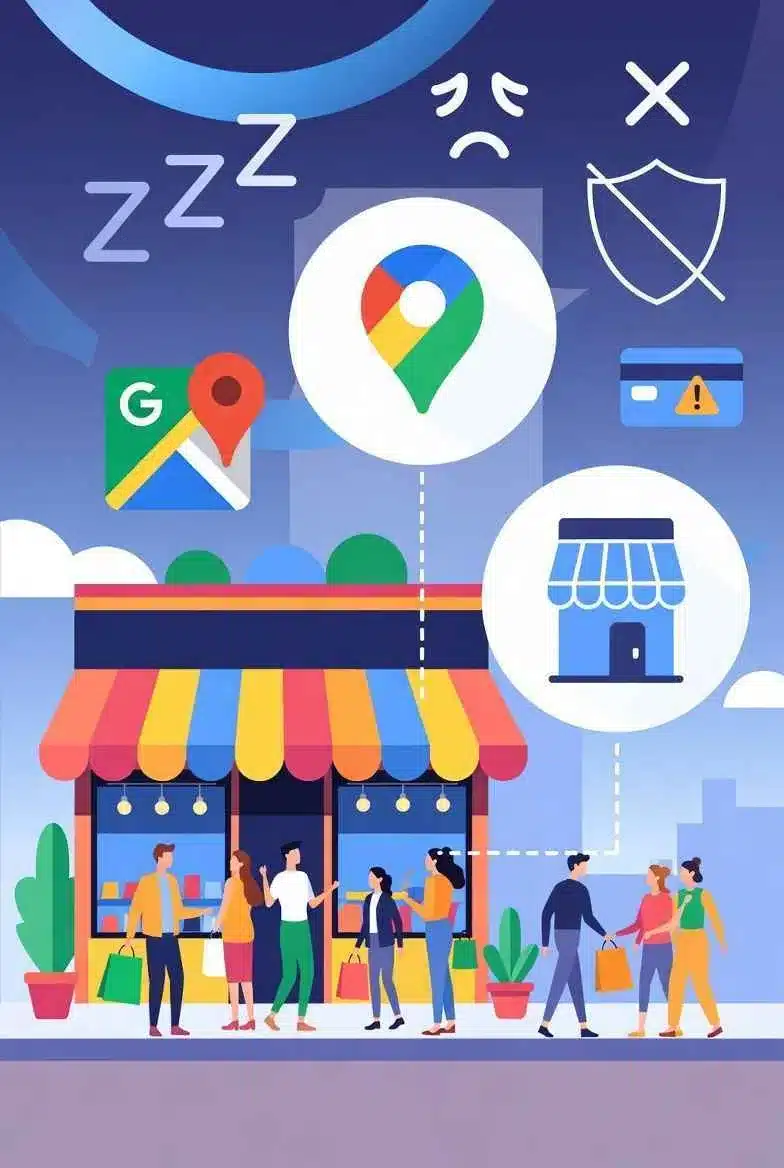
At the same time, physical shops are regaining ground, driven by a crisis of trust in online shopping and a technology ecosystem dominated by Google that is accelerating drive-to-store*. The physical shop no longer stands against digital, the two become complementary. And that is excellent news for local shops!
*Drive-to-store refers to digital strategies that aim to turn an online ad into a physical visit to a shop, building on local intent, proximity and actions such as directions or calls.
Fraud, stress, uncertainty: what is at stake for physical shops in 2026?
According to recent surveys (Havas Commerce/CSA 2024–2025, stable in 2025), 84% of French people still prefer to buy in a physical shop for many products, precisely for that peace of mind: seeing, touching and trying on the spot, getting immediate human advice, and solving a problem without a distant intermediary.
Players such as Shein have been at the centre of major controversies in Europe, combining non-compliant products, suspected circumvention of regulations and environmental impacts, to the point of fuelling draft laws aimed directly at ultra fast fashion. For its part, Vinted faces a growing number of reports of scams, fake profiles, off-platform payments and products presented in a misleading way, sometimes using AI-generated images.
These excesses, widely reported on social media and in the press, end up weighing heavily on the online reputation of the platforms concerned. For many consumers, they reinforce the idea that buying online now carries a higher perceived risk than buying in a shop, where the product is visible, the person you deal with is identifiable and the transaction is immediate.
According to Oneytrust (in partnership with FEVAD), online fraud now accounts for more than a billion euros in losses for French online retail every year, with around 60 million fraudulent transactions estimated. These figures mainly concern online retailers, but they feed straight through to buyers via sophisticated scams: smishing (fraudulent texts imitating couriers), fake shopping sites, counterfeits, AI-generated product photos designed to mislead on real quality, identity theft or payment fraud. At the same time, overall cybercrime hits French businesses to the tune of more than €100 billion in 2024 (Statista), with phishing as the main vector (60% of attacks according to the CESIN Barometer 2025), and 82% of e-commerce executives expecting an increase in attempts in 2025.
Beyond the direct financial losses, these incidents carry a psychological and time cost for the consumer: post-purchase stress (fear that the parcel will not arrive or will be counterfeit), time lost on disputes, complicated follow-ups, calls to customer services, and often lengthy refund procedures. Add to that returns that increasingly come at a cost.
The result: once the amount at stake exceeds a few hundred euros, the trade-off changes radically. The convenience of a click no longer outweighs the perceived risk, the uncertain wait (lead times, real quality, delivery) or the potential disappointment. For a high-tech product (smartphone, computer, tablet, camera, etc.), French consumers even accept a premium of 5% to 15% when buying in store compared with the online price, provided the difference is justified by concrete services or benefits.
The shop thus becomes a true sanctuary of trust again, where the sensory and human experience removes much of the uncertainty of online shopping. This is not a rejection of e-commerce, which remains dominant for recurring, low-risk purchases (consumer goods, restocking), but a rebalancing towards more security and peace of mind when the stakes are high. This search for human, immediate reliability largely explains why phygital and drive-to-store are gaining ground in 2025–2026.
What is “phygital”? A concept from 2013 that has not aged a day.
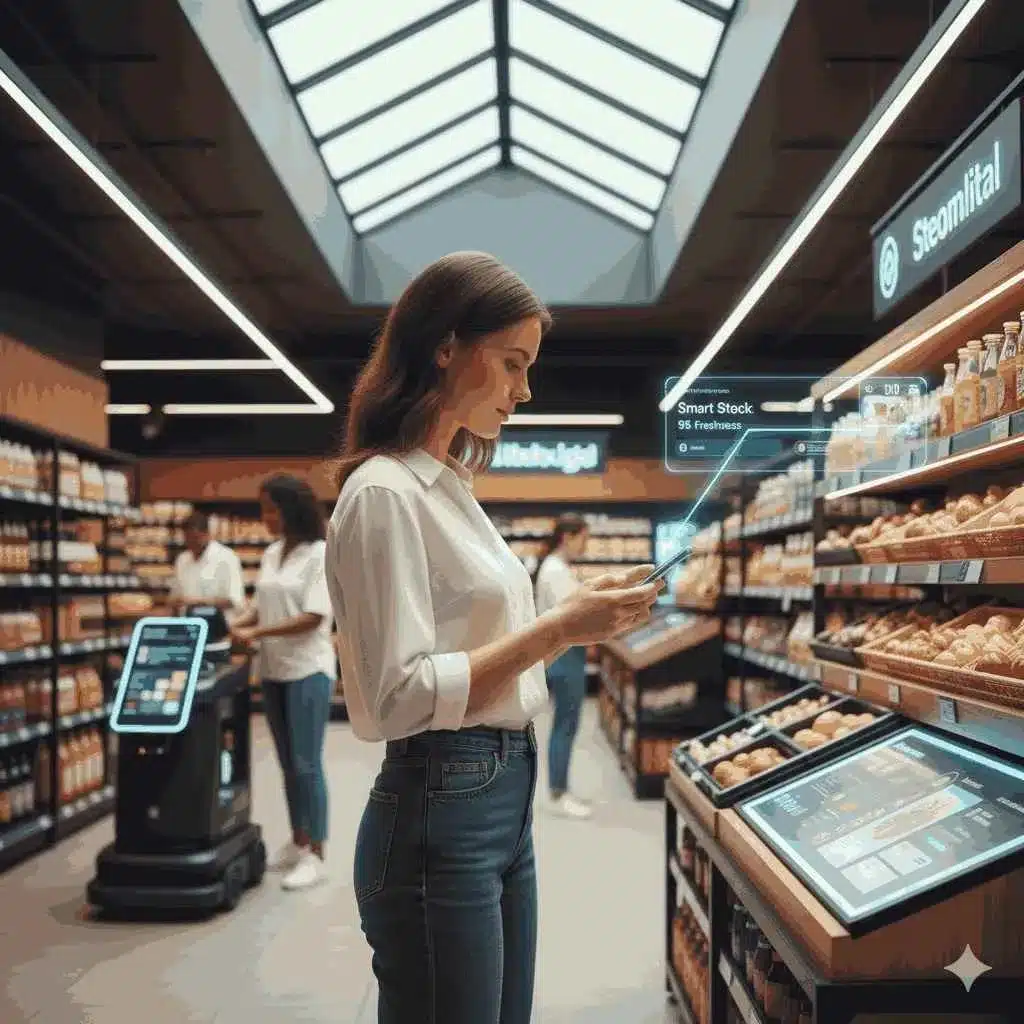
The customer searches online, compares on their phone, reads Google reviews, then goes to the shop to complete the purchase, where they can use click & collect or a payment made online. Physical does not push out online, it complements it and makes it more effective.
- In fashion, leather goods or accessories, trying things on remains essential and ROPO (Research Online, Purchase Offline) has become the norm.
- Crafts, one-off pieces and works of art draw their value from authenticity and from meeting the maker, so the shop becomes a genuine storytelling medium.
- For premium, technical or high-commitment products (furniture, hi-fi, jewellery, specialist sports gear), reassurance matters more than price alone.
The physical shop is no longer an isolated destination but the anchor point of a digital ecosystem that serves it and enhances it. It is becoming an experiential showroom, a service centre and an ultra-fast collection point. These arrangements turn the shop into the final point of conversion, even when the journey starts on Google, Maps or social media.
Which paid strategy pays off for local shops in 2026? A closer look at drive-to-store Google Ads
Unlike purely e-commerce approaches, drive-to-store campaigns do not try to maximise clicks but to generate qualified visits to the shop. In this logic, Google Ads becomes a key strategic lever for turning digital visibility into real footfall.
It relies on a precise combination: Performance Max campaigns linked to the Google Business Profile, local conversion goals (directions, calls, Maps interactions) and consistent geographical signals. This approach makes it possible to measure what was historically invisible, the direct impact of digital on physical traffic. It does, however, require a rigorous set-up of local conversion tracking and a different reading of performance, focused on footfall and not only on online revenue.
Google’s role in this rebalancing is therefore decisive. Its algorithm explicitly aims to turn high-intent local searches, such as “best sofa in Bordeaux”, into directions to relevant physical shops.
Genuine reviews play a key role here, acting as the structuring trusted third party of this new local economy. Far from weakening local retail, Google now offers it a digital arena in which to compete on a more level footing with the e-commerce giants, provided it masters the strategic levers.
Reviews, the new digital gold: why has Google made them its currency?
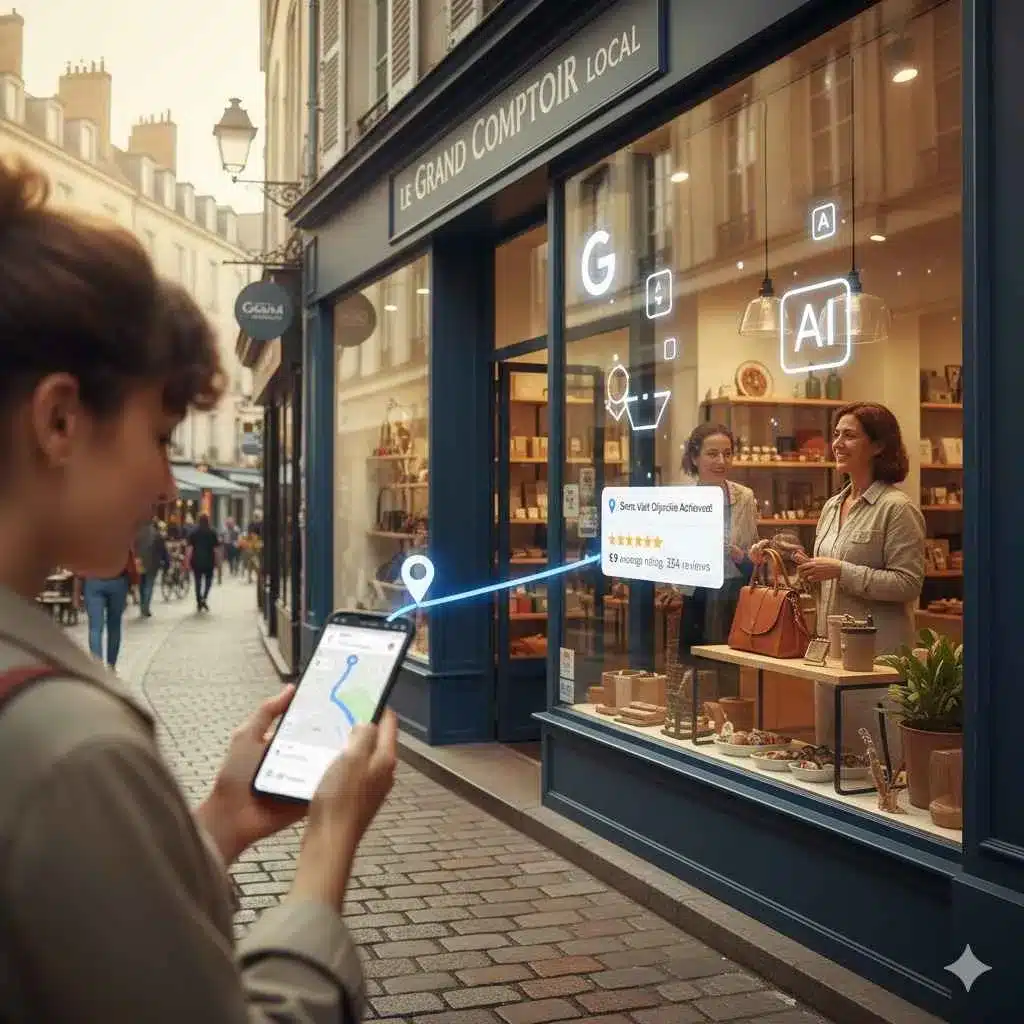
Thanks to the combined ecosystem of Google Maps, Google Business Profile and Performance Max, enriched since 2025 by the automatic integration of Waze Ads into drive-to-store strategies, the goal is clear: turn a search intent into a real journey to a point of sale.
This is precisely where Google plays a central role as a catalyst. Now well beyond its original function as a search engine, Google has established itself as an engine of local intent, a recommendation system, a trusted third party through reviews, and a genuine driver of physical traffic.
In this context, reviews become the new currency of local retail. The stakes are strategic for Google. Reliable reviews generate more trust, therefore more use, and ultimately more monetisation through directions, local campaigns and Maps interactions.
Recent algorithm changes reinforce this dynamic. In 2025, Google considerably improved its detection of fake reviews, relying on semantic analysis, behavioural consistency and the correlation between reviews, physical visits and directions. We all use Google Maps or Waze, so it is not hard for them to know whether someone really went to a given gym, or whether a given customer came to your offices. This approach mechanically favours authentic businesses that people actually visit and that are firmly rooted in their area.
For small shops, this change represents a historic opportunity: access to visibility and credibility comparable to those of the e-commerce giants, without disproportionate marketing budgets.
How AI narrows the gap between independents and large chains?
Artificial intelligence now acts as a major accelerator of this rebalancing, making available levers once reserved for large organisations:
- Predictive stock management
- Customer service automation
- Replies to reviews
- Data-driven local campaigns
- Production of optimised content…
An independent retailer can now reach a level of operational efficiency comparable to that of businesses with dedicated teams. The barrier to entry is gradually fading. Even Amazon is gradually losing its exclusive hold on large-scale optimisation and automation.
The real differentiator no longer lies in size or investment capacity, but in the ability to offer a human, personalised and consistent experience, now augmented by technological power within everyone’s reach.
Generative AI will amplify this movement. Tomorrow, conversational assistants and recommendation engines will no longer simply highlight the cheapest offer, but will favour the best-rated, nearby businesses offering a reliable customer experience. In this environment, a physical shop with good visibility naturally becomes “AI-compatible”, because it ticks the boxes of trust, proximity and social proof these systems look for.
Why can local shops be the big winners of AI?
The next stage of this evolution may well be played out with generative and conversational AI. These assistants, built into search, will no longer just list the cheapest links. They will tend to give concise, action-oriented answers.
Drawing heavily on data about trust, proximity and social proof (reviews), they could naturally favour a recommendation such as: “Shop X, 10 minutes from you, has the item in stock, is rated 4.8/5 with more than 200 reviews and offers a free fitting.”
This prospect confirms the decisive advantage of a well-rated physical shop with good visibility.
Conclusion
For retailers, the signal is unambiguous: the future lies neither in all-digital nor in all-physical, but in the ability to build a smooth, coherent ecosystem in which each channel strengthens the others.
In this new configuration, technology is no longer a disruptive force working against local retail. On the contrary, driven by Google and artificial intelligence, it becomes a lever for rebalancing and reassurance, capable of giving power back to local players in the face of global platforms.
Sources & references:
- FEVAD, French e-commerce figures 2024–2025
- FBI, Internet Crime Report 2024
- European Retail Outlook 2025
- Google Ads & Google Business Profile Updates 2025
- McKinsey, The Future of Omnichannel Retail (2025)
- Deloitte, Consumer Trust & Commerce Report (2025)
- Statista, In-store vs Online Retail Share Europe (2025)
Written by
Nicolas Peter, Web Performance, certified Google Ads expert in Paris and Perpignan
Oli-via-net agency
Request your free quote to improve your online reputation.
Is your Google profile not getting enough reviews?
Are a few negative reviews hurting your image?
Or would you like to professionalise the way you handle customer feedback?
We put in place a complete strategy to:
- increase the number of positive reviews,
- keep your ratings on Google & Trustpilot under control,
- improve your reputation and your conversion rate,
- showcase the quality of your service.
We combine automation, editorial support and legal compliance for a solid, lasting reputation.
➡️ Fill in the form opposite and we will get back to you within 24 hours with a personalised proposal.
No commitment.